Lighting has quietly moved from a supporting role in interior design to something that often defines the entire personality of a space. In older design approaches, lighting was treated as a practical necessity. It was something you added after the furniture was chosen, after the paint was applied, and after the layout was finalized. It existed to make the room usable, not necessarily beautiful.
That mindset has changed completely. Today, statement lighting is no longer just functional. It is becoming the centerpiece of modern interiors. In many homes, the lighting fixture is the first thing people notice and the element that determines how the rest of the space is perceived. This shift is not accidental. It reflects broader changes in how people live, how homes are used, and how interior design itself is evolving.
Lighting Is No Longer an Afterthought
Traditionally, lighting was treated as a finishing detail. A ceiling light was installed, maybe a lamp or two were added, and the room was considered complete. The focus was always on furniture, wall colors, and decor.
But modern interiors have become more visually controlled and emotionally driven. Designers realized that lighting affects everything else in the room. It changes color perception, texture visibility, mood, and even how large or small a space feels.
Because of this, lighting is now often chosen early in the design process instead of at the end. The fixture is not just placed into a room. The room is built around the lighting.
This change alone has elevated lighting from a background utility to a central design feature.
Statement Lighting Works Like Visual Architecture
One of the reasons statement lighting has become so dominant is because it behaves almost like architecture inside a room.
A large pendant lamp, an oversized chandelier, or a sculptural floor lamp does more than illuminate a space. It defines structure. It creates focal points. It guides the eye and organizes how a room is visually experienced.
In many modern interiors, lighting replaces traditional decorative objects. Instead of filling a room with multiple small accents, designers use a single bold lighting piece to anchor the entire space.
This reduces visual clutter while still maintaining strong character.
Why Minimalism Made Lighting More Important
Minimalist design played a major role in pushing lighting to the forefront.
As interiors became simpler and more stripped back, fewer objects were competing for attention. Walls became cleaner, furniture became more streamlined, and decor became more restrained.
In this environment, lighting naturally became more visible.
A sculptural light fixture in a minimal room stands out immediately because there are fewer distractions. Instead of blending in, it becomes the most expressive element in the space.
Minimalism didn’t reduce the importance of lighting. It amplified it.
Lighting as Emotional Design, Not Just Function
Modern interior design places a strong focus on emotional experience. Homes are no longer just functional spaces. They are environments for relaxation, focus, and emotional reset.
Lighting plays a direct role in shaping that emotional experience.
Warm lighting creates comfort and calmness. Cooler lighting can feel more structured and alert. Dim lighting introduces softness and intimacy. Bright lighting adds clarity and energy.
Statement lighting takes this further by combining emotional impact with visual presence. It doesn’t just change how a room feels. It changes how a room is perceived.
A carefully chosen lighting piece can make a space feel warm, dramatic, elegant, or grounded without changing anything else.
Sculptural Designs Are Replacing Traditional Fixtures
One of the most noticeable trends in statement lighting is the move toward sculptural forms.
Instead of simple bulbs or basic shades, lighting fixtures are now designed as artistic objects. They often resemble sculptures, abstract shapes, or architectural elements.
These designs are meant to be seen even when turned off. They function as both lighting and decor.
Materials like glass, brushed metal, ceramic, and natural stone are commonly used to create pieces that feel more like art installations than utility objects.
This dual purpose is what makes statement lighting so powerful in modern interiors.
Oversized Fixtures Are Becoming More Common
Another major shift is scale.
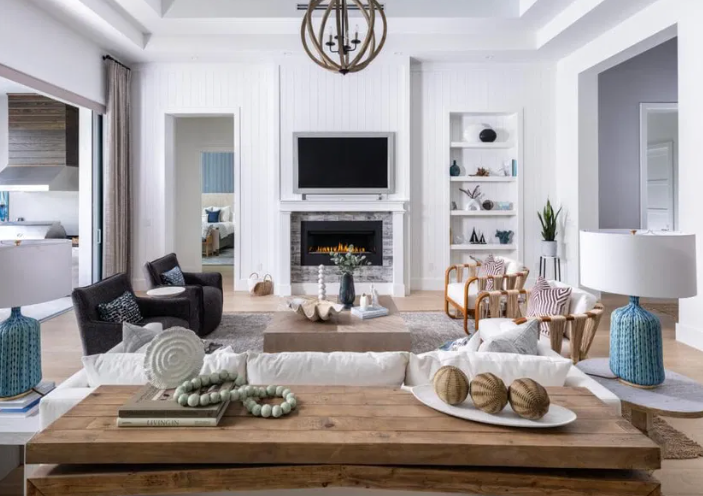
Lighting fixtures are becoming larger and more dominant within rooms. Oversized pendant lights over dining tables, large chandeliers in living spaces, and bold floor lamps in corners are increasingly popular.
This increase in scale is intentional. A larger fixture naturally draws attention and helps define zones within open spaces.
In open-plan homes, lighting is often used to separate areas visually without adding physical barriers. A large light above a seating area can define that zone more clearly than walls or furniture arrangements.
Layered Lighting Is Still Important, But Less Visible
Even though statement lighting is gaining attention, layered lighting systems still exist in most well-designed homes.
The difference is that these layers are now more subtle.
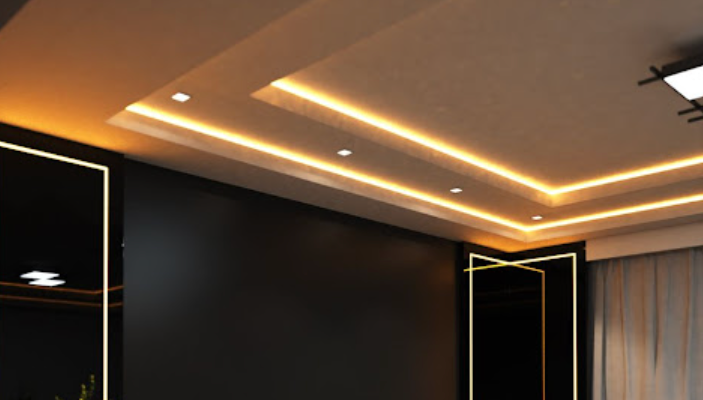
Instead of multiple visible light sources competing for attention, designers hide supporting lighting in architectural details. Recessed lighting, hidden strips, and indirect illumination work in the background.
This allows the statement piece to remain the focal point while the rest of the lighting supports it quietly.
The result is a more controlled visual hierarchy within the space.
Lighting as a Replacement for Heavy Decor

In earlier design styles, rooms often relied on decorative objects like sculptures, artwork, and accessories to create interest.
Now, a single lighting fixture can replace much of that visual load.
A bold chandelier above a dining table or a sculptural lamp in a living room can provide enough visual complexity on its own. This reduces the need for excessive decoration.
As a result, interiors feel cleaner while still maintaining strong personality.
This is one reason statement lighting fits so well with modern minimal and contemporary design styles.
How Lighting Changes Spatial Perception
Lighting does more than illuminate a space. It changes how space itself is perceived.
A well-placed light can make a room feel taller, wider, or more intimate depending on direction and intensity.
For example, upward-facing light can emphasize height, while downward-focused lighting creates intimacy and focus. Soft diffused lighting can blur edges and make spaces feel larger than they are.
Designers use these effects intentionally when placing statement lighting, ensuring that the fixture contributes not only visually but spatially.
The Emotional Memory Effect of Lighting
One of the less discussed aspects of lighting design is its connection to memory and emotion.
People often remember spaces not just by how they looked, but by how they felt under certain lighting conditions.
Warm pendant lights in a dining space, soft glowing lamps in a bedroom, or dramatic lighting in a lounge area all create emotional associations that linger.
Statement lighting strengthens this effect because it becomes a defining visual memory within the space.
It is often the element people remember most clearly after leaving a room.
Why Statement Lighting Feels Like the Future of Interior Design
As homes continue to evolve into multi-functional environments, design elements need to do more than one job. Lighting is uniquely positioned to meet this demand.
It is functional, emotional, sculptural, and spatial at the same time.
Few other design elements carry this level of influence.
Because of that, lighting is no longer just part of interior design. It is becoming one of its main defining features.
Statement lighting represents a shift in how interiors are built and experienced. Instead of being hidden in the background, lighting is now taking center stage and shaping the identity of entire spaces.
It influences mood, defines structure, replaces decor, and creates emotional depth all at once.
In modern interiors, lighting is no longer something added at the end. It is often the starting point. And in many cases, it is the element that decides how the entire room will feel.