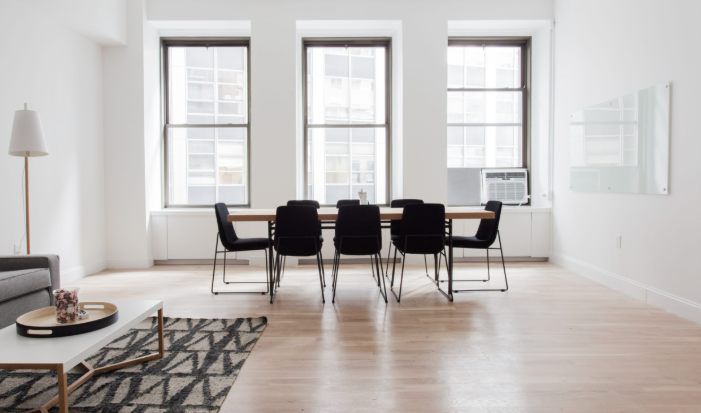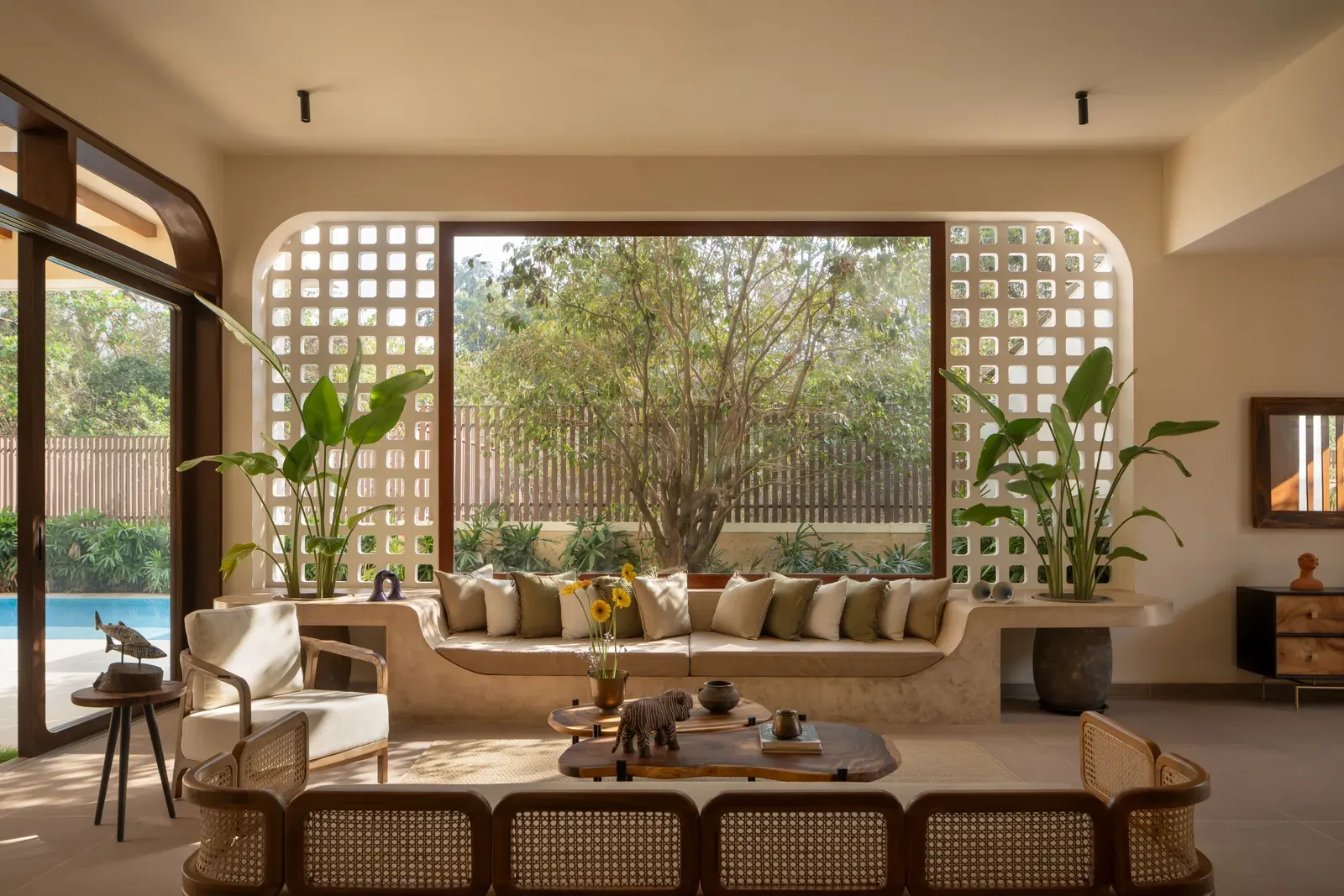
Some rooms feel instantly right the moment you walk in. Nothing stands out as too heavy, nothing feels visually awkward, and your attention moves naturally across the space without getting stuck anywhere. Other rooms, even when filled with expensive furniture or carefully chosen decor, feel slightly off. Not broken, just uneven in a way that is hard to explain.
That difference usually comes down to a single principle that quietly governs almost every well-designed interior: visual balance.
It sounds simple, but it is one of the most powerful and least understood ideas in interior design. It is not about matching furniture or creating perfect symmetry. It is about how visual weight is distributed across a space so that the eye feels stable as it moves through it.
Once this principle is understood, it changes how every room is seen.
Balance Is Not Symmetry

One of the most common misunderstandings in interior design is the idea that balance means symmetry. Many people assume a room feels balanced when both sides look identical, like mirrored furniture layouts or perfectly matched decor pieces.
But real design balance is much more flexible than that. A room does not need identical objects on each side to feel stable. Instead, it needs equal visual weight distributed across different areas. One side might have a large sofa, while the other side might balance it with a tall plant, a bookshelf, or even negative space.
What matters is not sameness, but equilibrium. The brain does not measure balance by counting objects. It responds to overall visual pressure across the space. This is why asymmetrical rooms can still feel calm and organized when designed correctly.
Understanding Visual Weight
Visual weight is the core idea behind balance. Every object in a room carries a certain amount of visual importance based on several factors.
Size is the most obvious. Larger objects naturally draw more attention. But color, texture, shape, and placement also affect how heavy something feels visually.
A dark-colored sofa feels heavier than a light-colored one. A tall object draws more attention than a low one. A highly textured surface feels more visually active than a smooth one. Even positioning matters, as objects placed at eye level feel more dominant than those closer to the floor.
When all of these factors are combined, every room becomes a kind of visual equation where weight must be distributed evenly for the space to feel stable.
Why the Eye Reacts So Quickly to Imbalance
Human perception is highly sensitive to structure and order. When a room is balanced, the eye moves smoothly without interruption. When it is unbalanced, attention keeps returning to certain points because something feels visually dominant or under-supported.
This creates a subtle sense of discomfort, even if the room is beautiful in isolation.
For example, a large dark piece of furniture placed on one side of a room without any counterbalance can make the entire space feel like it is leaning in that direction. Even if the rest of the room is well designed, the imbalance pulls attention repeatedly back to the heavier side.
The brain does not ignore this. It constantly recalibrates what it sees, which is why imbalance feels noticeable even when it is hard to describe.
The Role of Distribution, Not Matching
Balanced interiors are not built through matching items. They are built through distribution.
This means visual weight is spread across the room in a way that feels even, even if the objects themselves are completely different.
A tall bookshelf can balance a wide sofa. A cluster of smaller objects can balance a single large piece. A visually busy area can be offset by a calm, empty space.
The goal is not replication. It is compensation.
This is why professional interiors often look effortless. The elements are not identical, but they are carefully distributed so no area feels heavier than another.
Negative Space Is Part of the Balance Equation
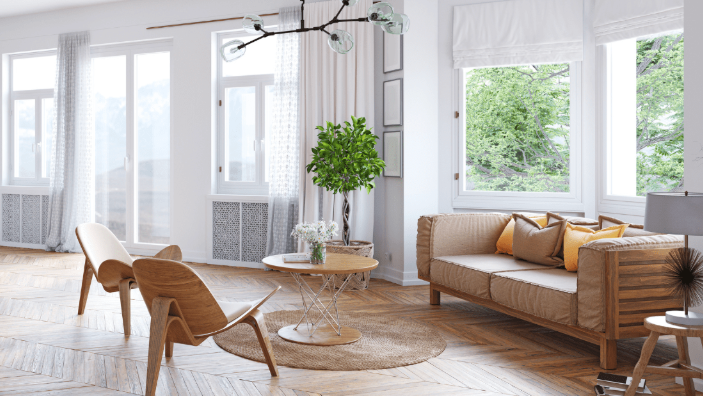
Empty space plays a much bigger role in balance than most people realize. In well-designed rooms, negative space is not accidental. It is intentionally placed to create breathing room between visual elements. This space reduces visual pressure and allows the eye to rest.
A wall without decoration, a corner without furniture, or a clear surface on a table all contribute to balance just as much as physical objects do. Without negative space, even well-arranged rooms can feel overcrowded and visually heavy. In contrast, a room with thoughtful empty areas feels calmer and more structured, even with fewer objects.
Height Distribution Shapes Stability
Balance is not only horizontal. Vertical structure is equally important.
If all tall objects in a room are placed on one side, the space will feel visually uneven. Height needs to be distributed across the room so the eye does not constantly rise in one direction.
For example, a tall lamp on one side might be balanced by vertical artwork or shelving on the other. Low furniture like sofas and tables helps anchor the middle layer of the room.
A balanced interior usually has a rhythm of heights, moving between low, medium, and tall elements across the space rather than clustering them in one area.
Color Weight and Emotional Pull
Color also contributes significantly to visual balance.
Dark tones tend to feel heavier because they absorb attention. Light tones feel lighter and more open. Bold or saturated colors draw focus even in small amounts.
A single dark accent wall can dominate a space if not balanced by lighter elements elsewhere. Similarly, a bright object in a neutral room can shift attention strongly toward one side.
Designers manage this by distributing color intensity throughout the room, ensuring that no single area carries too much visual dominance.
This creates a more even emotional experience as well, since color also influences mood perception.
The Power of Controlled Focal Points
Every room benefits from focal points, but too many focal points can destroy balance.
A focal point is an area that naturally draws attention, such as a large piece of art, a fireplace, or a statement piece of furniture. In a balanced room, there is usually one primary focal point supported by secondary visual interest.
When everything competes for attention, the room feels chaotic. When nothing stands out, the room feels flat. Balance exists in the space between those extremes.
Designers carefully decide where attention should land first, and then build supporting elements around it to guide the eye naturally.
Why Perfect Rooms Still Feel Wrong Sometimes
One of the most interesting aspects of balance is that even expensive or perfectly styled rooms can feel slightly off if distribution is ignored.
This often happens when furniture is chosen individually without considering how it interacts with everything else. A beautiful sofa, a stylish table, and elegant lighting can still create imbalance if they are not positioned in relation to each other.
Balance is relational, not absolute. It is not about the quality of individual items but about how they work together within a shared visual field.
Dynamic Balance Feels More Natural Than Static Balance
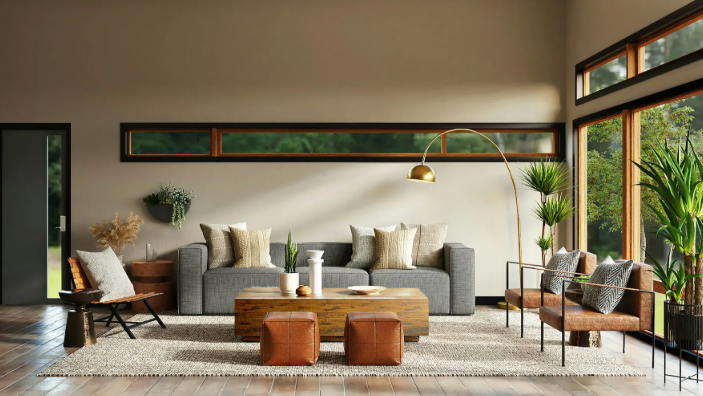
There are two types of balance in interior design static and dynamic. Static balance relies on symmetry and repetition. It feels orderly but can sometimes feel rigid or overly controlled.
Dynamic balance relies on uneven but compensated distribution of visual weight. It feels more natural and closer to how real spaces function in everyday life.
Most modern interiors prefer dynamic balance because it allows flexibility while still maintaining visual stability. This is why asymmetrical rooms often feel more modern and comfortable than perfectly mirrored ones.
The rule that makes a room feel balanced is not about matching, symmetry, or strict layout formulas. It is about distributing visual weight in a way that feels even across the entire space.
When size, color, height, texture, and empty space are all considered together, a room stops feeling like a collection of objects and starts feeling like a unified environment.
That sense of stability is what makes certain spaces feel naturally comfortable, even when nothing about them is immediately obvious.
Balance is not something you notice directly. It is something you feel without realizing why.