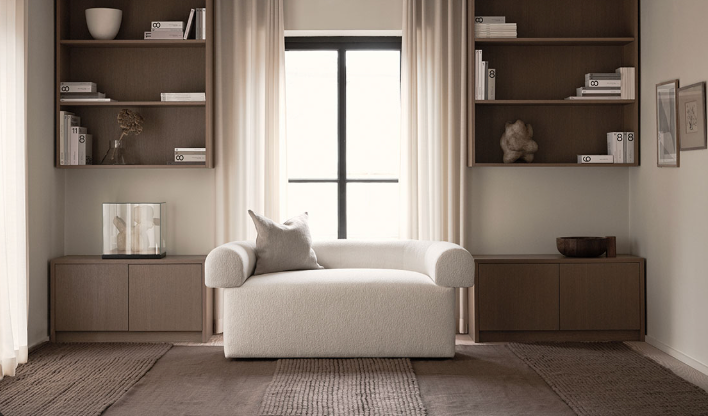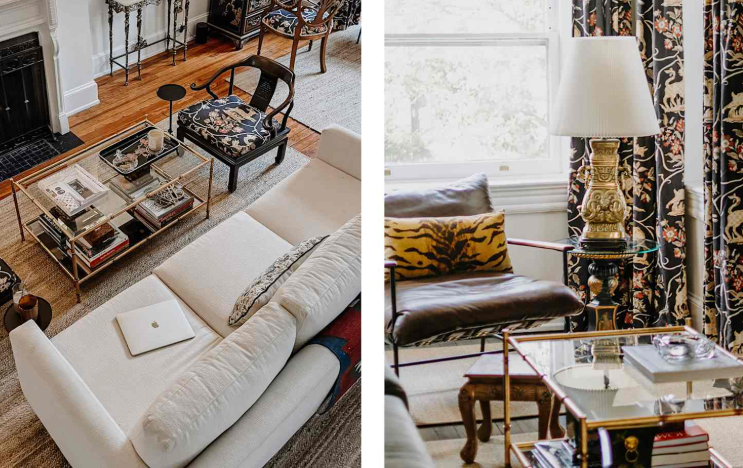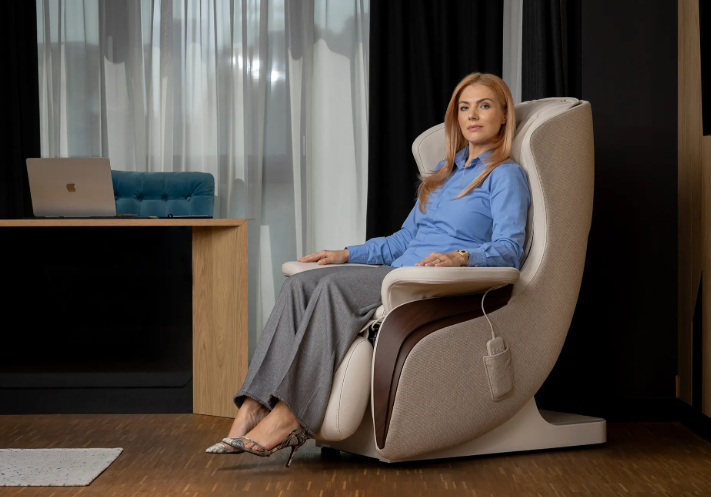
Walk into a modern home today, and something subtle starts to stand out. Sofas don’t feel as rigid as they used to. Coffee tables are less boxy. Chairs look softer around the edges, almost like they were shaped to blend into the room instead of sitting inside it.
This shift didn’t happen with loud announcements or dramatic redesign rules. It crept in slowly, through design studios, boutique furniture brands, and social media interiors that started favoring flow over structure. Curved furniture is now becoming one of the most noticeable changes in how living spaces are built and experienced. It’s not just about style. There’s a deeper change happening in how people want their homes to feel.
The End of the “Sharp Edge Era”
For years, interior design leaned heavily toward clean lines and sharp geometry. Straight sofas, rectangular tables, square shelves, and rigid layouts dominated homes, offices, and even cafes.
This style worked well for structure and simplicity. It looked organized. It was easy to plan. It gave rooms a clear sense of order.
But over time, something changed in how people interact with their living spaces. Homes started becoming more than just visual spaces. They became emotional environments. Places to relax, recover, and disconnect from constant digital noise.
Sharp corners began to feel a little too formal. A little too strict. Even slightly uncomfortable in spaces meant for rest.
That’s where curved furniture quietly started taking over.
Why Curves Feel More Natural to the Human Mind
Curved shapes exist everywhere in nature. Rivers don’t run in straight lines. Trees don’t grow in perfect boxes. Even the human body is made of soft curves rather than rigid angles.
Because of this, curved furniture tends to feel more instinctive and less structured. People often describe curved sofas or rounded tables as “softer” or “calmer” without even thinking about why.
There’s also a psychological layer to it. Sharp edges can feel directional and alerting, while curves feel continuous and relaxed. A rounded environment doesn’t force the eye to stop and restart constantly. Instead, it guides the gaze smoothly around the room.
This subtle difference changes how a space feels when you sit inside it for long periods.
The Rise of Flow-Based Interior Design
Modern interior design has started to focus less on strict layout rules and more on movement within a space.
Instead of dividing rooms into fixed zones, designers are now thinking in terms of flow. How someone moves from one area to another. How conversations happen around furniture. How light and space travel through the room.
Curved furniture fits into this approach naturally. A rounded sofa doesn’t create hard boundaries. It encourages movement around it. A circular table invites equal seating positions rather than directional hierarchy.
This makes rooms feel less segmented and more connected.
Even in smaller apartments, curved furniture can reduce the feeling of visual blockage. It opens up corners instead of closing them off.
The Social Shift Behind the Design Trend
Furniture trends don’t change randomly. They often reflect how people’s lifestyles are changing.
Today, homes are used for multiple purposes. A living room might also be a workspace. A dining area might double as a meeting space. Bedrooms often act as personal retreats, gyms, or reading zones.
In such flexible environments, rigid furniture starts to feel limiting. Curved pieces, on the other hand, adapt better to multi-use living.
They make spaces feel less formal and more usable in different ways throughout the day.
There’s also a cultural shift toward comfort over display. People are less interested in showing off perfectly structured interiors and more interested in creating spaces they actually enjoy being in.
Curved furniture fits that mindset perfectly. It feels lived-in, not staged.
The Visual Psychology of Soft Geometry
One of the most interesting aspects of curved furniture is how it changes visual perception.
Sharp furniture creates strong visual anchors. Your eyes naturally stop at corners and edges. This can make a room feel more segmented and sometimes smaller.
Curves do the opposite. They allow the eye to move smoothly. This creates a sense of openness, even in compact rooms.
In many modern interiors, designers use this effect to make small spaces feel larger without changing the actual layout.
A rounded sofa in the center of a room doesn’t cut the space into blocks. Instead, it blends into the environment, making everything feel more continuous.
How Curved Furniture Changes Social Interaction
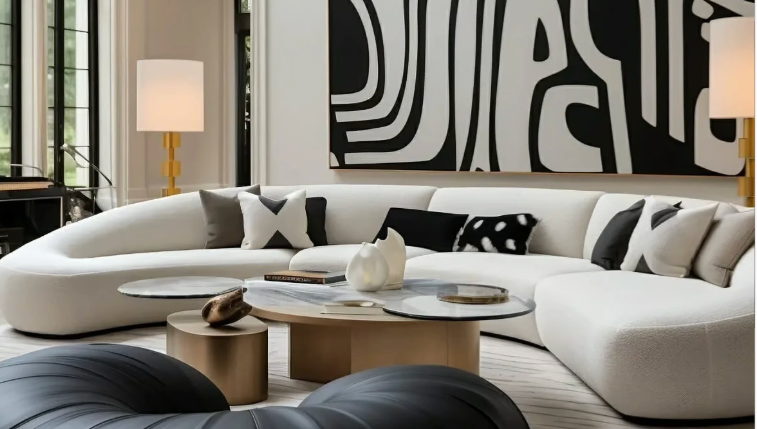
Furniture doesn’t just shape rooms. It shapes how people interact inside them.
A traditional rectangular sofa often creates a directional setup. People naturally sit side by side or face a single direction. Conversation can feel structured or slightly divided.
Curved seating changes that dynamic completely. It brings people slightly inward, encouraging eye contact and shared focus. It removes the sense of “front” and “back” in seating arrangements.
Round tables do something similar. They eliminate hierarchy in seating positions. No one sits at the “head” of the table. Everyone feels equally placed in the space.
These small changes can subtly improve how people communicate in a room, especially in social or family settings.
Why Designers Are Leaning Into Organic Shapes
A major reason curved furniture is growing in popularity is the broader shift toward organic design.
Instead of purely functional or industrial aesthetics, modern interiors are embracing shapes that feel more natural and less manufactured.
This includes not just curves, but also irregular forms, soft edges, and flowing silhouettes.
Furniture designers are experimenting more with sculptural pieces that look almost like art objects rather than traditional furniture. Sofas that resemble soft waves. Chairs that feel molded rather than assembled. Tables that avoid perfect symmetry.
This approach creates interiors that feel more personal and less standardized.
The Balance Between Curves and Structure
Even though curved furniture is becoming more popular, it doesn’t completely replace straight-line design. Most modern interiors actually mix both.
Straight lines still provide structure. They define walls, floors, and architectural boundaries. Curves are then added to soften those structures and make the environment feel more human.
This balance is what gives modern interiors their character. Too many curves can make a space feel overly soft or undefined. Too many straight lines can make it feel rigid.
The combination of both creates contrast, which is what makes a room visually interesting.
The Future Direction of Home Design
Looking ahead, curved furniture is likely to become even more common, not as a trend, but as a standard design language.
As homes continue to evolve into multi-purpose environments, the demand for flexible, comfortable, and emotionally balanced interiors will only grow.
Furniture will likely become even more fluid in shape, blending function with comfort and visual softness. The idea of rigid “sets” of furniture may continue to fade, replaced by more adaptive, sculptural pieces.
The focus is shifting away from perfect symmetry and toward natural flow.
Curved furniture isn’t just a design preference. It reflects a broader change in how people want to live inside their homes. Less pressure, less rigidity, more comfort, and more natural movement.
What started as a subtle design shift is now becoming a defining feature of modern interiors, quietly reshaping the way homes feel from the inside out.