Bedrooms used to be simple. A bed, a wardrobe, maybe a side table and a lamp. The idea was straightforward: a place to sleep and store clothes. But that version of the bedroom doesn’t really match how people live anymore.
Sleep itself hasn’t changed, but everything around it has. Screens are everywhere. Work routines stretch late into the evening. Stress doesn’t stay outside the home. And as a result, bedrooms have slowly started taking on a different role.
They are no longer just sleeping spaces. They are becoming environments designed around how people actually wind down, not just how they fall asleep.
Why Traditional Bedrooms Don’t Work the Same Anymore
The older bedroom model assumed a clean break between day and night. You finish your day, enter the bedroom, and switch off. In theory, it sounds simple.
In reality, most people carry their day into their bedroom. Phones are still active. Thoughts are still moving. Light exposure is inconsistent. Even the furniture layout often doesn’t support a proper mental transition.
A standard bedroom setup doesn’t guide the mind toward rest. It just places a bed in a room and assumes sleep will follow naturally.
That assumption is exactly what modern design is now questioning.
Bedrooms Built Around Behavior, Not Just Furniture
The new direction in bedroom design focuses less on appearance and more on behavior patterns. Instead of asking how a bedroom looks, designers are starting to ask how a person moves through it across the entire day.
Where do they sit before sleeping? Where do they place their phone? How do they transition from activity to rest? What kind of lighting supports that shift?
Sleep-friendly bedrooms are built around those small, repeated habits rather than just visual structure.
The result is a space that feels more aligned with real life instead of an idealized version of it.
The Importance of Transition Zones Inside the Bedroom
One of the most noticeable changes in sleep-focused design is the introduction of transition zones. These are not separate rooms or large areas, but small shifts within the bedroom itself.
A chair placed slightly away from the bed. A soft-lit corner for winding down. A surface that is intentionally kept free of devices or clutter. These micro-zones help separate mental states.
Instead of going directly from full activity to sleep, the brain moves through a softer transition. This reduces mental friction and creates a more natural descent into rest.
Without these zones, the bedroom often feels like a single-use space, which makes it harder for the mind to shift gears.
Lighting That Follows the Body’s Rhythm
Lighting plays one of the most important roles in sleep-friendly bedrooms. Harsh or overly bright lighting can keep the mind alert even when the body is tired.
Modern sleep-focused design uses layered lighting instead of a single overhead source. This allows the room to shift in mood depending on time and activity.
Warm, low-level lighting in the evening signals the body to slow down. Softer bedside lamps create focused calm without flooding the entire room. Indirect lighting reduces sharp contrast, which helps the mind relax more naturally.
The goal is not darkness. It is controlled softness.
The Role of Routine-Based Layouts
Sleep-friendly bedrooms are increasingly built around daily routines instead of static furniture placement.
Instead of placing objects based only on symmetry or style, designers now consider how a person actually moves through the space at night and in the morning.
Where the bed is positioned in relation to light sources. How easily someone can reach essentials without disrupting rest. What direction the room flows when entering or leaving it.
These details may seem small, but they shape the consistency of daily habits. A well-aligned layout removes unnecessary effort from routine actions, which helps the mind stay in a calmer state.
Removing Visual Noise for Mental Clarity
One of the most important principles in sleep-friendly design is reducing visual noise. This doesn’t mean empty rooms, but controlled simplicity.
Too many visible objects create subtle mental stimulation. Even when they are not being used, they still register in the background of awareness.
By reducing clutter and keeping surfaces visually calm, the bedroom stops competing for attention. The mind is no longer processing multiple visual inputs before sleep.
This allows mental activity to slow down more naturally without forced effort.
The Shift Away From Device-Centered Bedrooms
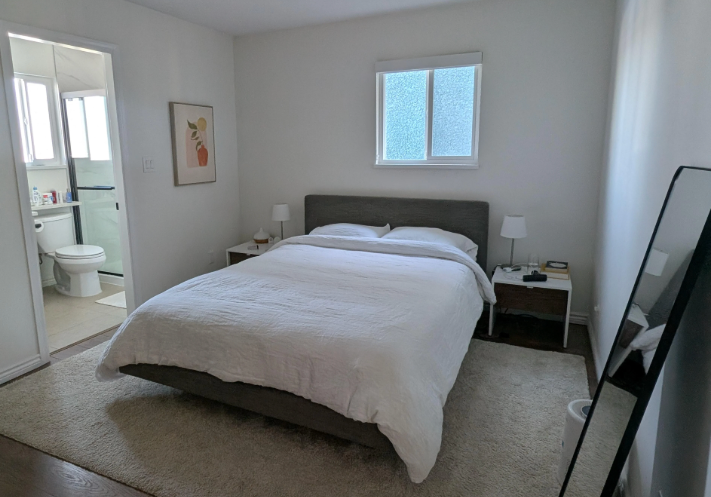
A major influence on modern sleep design is the presence of digital devices. Phones, tablets, and screens often remain in bedrooms, which changes how the space functions.
Instead of being purely restorative, the bedroom becomes partially active and partially alert. Notifications, light exposure, and mental engagement all affect sleep readiness.
Sleep-friendly design responds to this by creating separation between rest areas and device usage patterns. Not through strict rules, but through spatial cues.
Charging points placed away from the bed. Small surfaces that encourage placement outside immediate reach. Lighting that reduces screen dominance in the room.
These adjustments slowly shift behavior without needing constant discipline.
Texture and Material Choices That Encourage Rest
Materials in sleep-focused bedrooms are not just visual choices. They influence physical and emotional comfort.
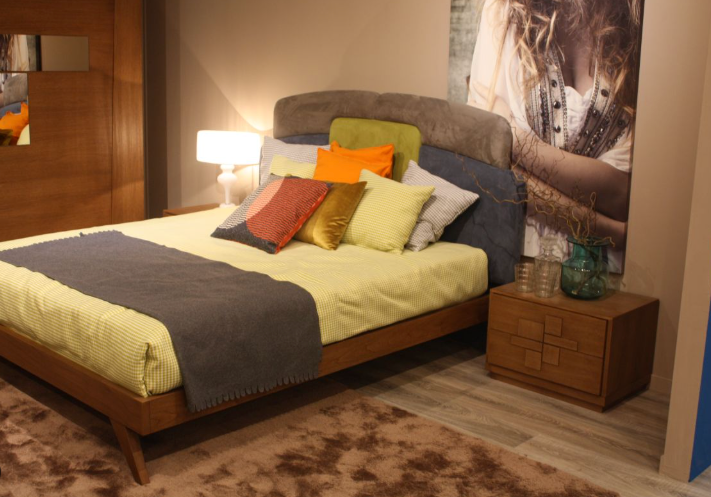
Soft fabrics, warm tones, and natural materials tend to create a sense of calm that supports relaxation. Hard, reflective surfaces can feel more alerting or visually active.
Bedding, curtains, rugs, and upholstered elements all contribute to the overall emotional temperature of the room.
When these materials are balanced well, the room feels more grounded and less stimulating, which supports the transition into sleep.
The Concept of Gradual Wind-Down Spaces
Instead of treating the bedroom as a single moment of rest, modern design often builds in a gradual wind-down experience.
This means the room supports a sequence rather than a switch. Sitting before lying down. Reducing light before sleep. Moving from active thought to passive rest.
The bedroom becomes part of a process rather than just an endpoint.
This approach reflects how people actually fall asleep, which is rarely instant. It is a slow reduction of activity and awareness.
Why Sleep Quality Is Now a Design Issue
Sleep is no longer viewed purely as a health or lifestyle issue. It has become part of spatial design thinking.
The environment directly affects how easily the body and mind can enter rest. Layout, lighting, sound, and material all influence sleep quality without being part of the sleep itself.
This has shifted attention toward designing bedrooms that support natural rest instead of relying on external solutions to fix poor environments.
The space itself becomes part of the sleep routine.
The Emotional Side of Sleep-Friendly Design
Beyond function, sleep-friendly bedrooms also affect emotional comfort. A well-designed rest space reduces subtle stress signals that often go unnoticed during the day.
When a room feels predictable, soft, and low-pressure, it becomes easier for the mind to release tension. There is less need to mentally “manage” the environment.
This emotional ease is one of the reasons these designs feel different even before sleep happens.
The room doesn’t demand attention. It allows release.
The Future of Bedroom Design Thinking
Bedroom design is slowly moving away from static aesthetics and toward behavioral alignment. Instead of focusing on how a room looks in a single moment, the focus is shifting toward how it supports different states of being over time.
Sleep-friendly bedrooms are part of that shift. They recognize that rest is not an isolated event, but part of a daily rhythm.
As lifestyles continue to blur the lines between work, rest, and personal time, bedrooms will likely become even more adaptive in how they support those transitions.