
Snake tattoos have remained popular across generations because they combine striking visual appeal with a wide range of symbolic meanings. A snake can appear elegant, mysterious, powerful, or intimidating depending on the design and cultural context. Throughout history, snakes have been connected with renewal, wisdom, protection, danger, healing, and transformation. Their ability to shed their skin has made them a familiar symbol of change, while their venom and defensive behavior have also associated them with risk and strength. These contrasting meanings explain why snake tattoos appeal to people with very different personalities and beliefs. Understanding the cultural background of a snake symbol can help someone choose a design that feels meaningful and respectful rather than relying on a single generalized interpretation.
The Universal Appeal of Snake Symbolism
Snakes appear in the stories, art, and religious traditions of many societies, but their meanings are not identical everywhere. In some traditions, they are respected as powerful guardians or symbols of life. In others, they represent temptation, danger, or the uncertainty of the natural world. Their physical characteristics have contributed to these associations. A snake can move quietly, defend itself rapidly, and survive by adapting to its surroundings. Shedding skin also provides a visible example of renewal, although the process does not mean that the animal becomes a completely new creature. For tattoo enthusiasts, these qualities create several possible interpretations. A snake may represent personal growth, self-protection, independence, or an awareness of life’s unpredictable nature. The meaning depends on the wearer’s intention and the visual style of the tattoo.
Snake Symbolism in Ancient Egyptian Culture
Snakes held important roles in ancient Egyptian religion, royal imagery, and mythology. One of the best-known examples is the uraeus, a representation of a rearing cobra associated with royal authority and divine protection. It frequently appeared on the crowns and headdresses of Egyptian rulers. The cobra was not simply a decorative animal. It communicated the power of the ruler and the protective forces connected with kingship. Other serpentine figures also appeared in Egyptian religious traditions, sometimes in roles associated with danger, protection, or the mysterious processes of the afterlife. Modern snake tattoos inspired by ancient Egyptian imagery may therefore symbolize authority, vigilance, or protection. However, anyone choosing a design based on historical Egyptian symbols should research the specific image rather than assuming that every ancient snake representation had the same meaning.
Snake Tattoos in Ancient Greek Traditions
In ancient Greek culture, snakes were associated with several religious and mythological ideas, including healing and renewal. The god Asclepius, connected with medicine and healing, was traditionally represented with a staff around which a snake was wrapped. This imagery remains influential in medical symbolism today, although it is often confused with the caduceus, which features two snakes and is associated with Hermes. Snakes also appeared in Greek stories involving guardians, monsters, and divine figures, giving them meanings beyond medicine alone. A snake tattoo inspired by this tradition may represent recovery, knowledge, or respect for the complexity of life. People who choose medical symbolism should understand the distinction between the different ancient emblems and select the one that accurately reflects their intended message.
Snakes in Hindu Traditions
Snakes have a significant presence in Hindu religious traditions, where serpent beings known as nagas appear in mythology and sacred narratives. Their roles vary across stories and regions, and they may be connected with water, fertility, protection, spiritual power, or the worlds associated with divine beings. Lord Shiva is often depicted with a serpent around his neck, an image commonly interpreted through themes of mastery, fearlessness, and spiritual discipline. Vishnu is also traditionally associated with Shesha, the cosmic serpent upon whom he rests in well-known depictions. Because these images are part of living religious traditions, a tattoo inspired by Hindu symbolism should be chosen with care and understanding. It is helpful to research the specific figure and its significance rather than treating a sacred image as a generic decorative motif.
Snake Imagery in Chinese Culture
In Chinese culture, the snake is one of the twelve animals in the traditional zodiac cycle. Snake symbolism can be associated with intelligence, careful observation, strategic thinking, and mystery, although interpretations differ depending on the source and individual beliefs. People born in the Year of the Snake are often described in popular zodiac interpretations as thoughtful and perceptive. These descriptions are cultural traditions rather than scientifically established personality traits. In artistic designs, snakes may be shown with flowing lines, floral elements, or traditional patterns that emphasize elegance and movement. A snake tattoo inspired by Chinese art can represent wisdom or personal identity for someone who connects with the symbolism. It is important to distinguish authentic cultural imagery from modern designs that simply borrow decorative elements without understanding their background.
Snakes in Japanese Tattoo Art
Snake imagery has a long history in Japanese tattoo traditions, where it can carry associations with protection, good fortune, transformation, and the ability to overcome adversity. In some designs, the snake is depicted with flowers, water, or other traditional motifs that influence the overall interpretation. A snake may be shown coiling around an object or moving through a dramatic composition, allowing the artist to emphasize its shape and strength. Japanese tattoo art also includes many symbolic relationships between different creatures and natural elements, so the meaning of a snake design should be considered alongside its surrounding imagery. Someone interested in this style should consult an artist familiar with traditional Japanese tattoo composition and symbolism, especially when selecting a large or culturally specific design.
The Snake in Abrahamic Religious Traditions
In Jewish and Christian scriptures, the serpent appears in several important narratives, most famously in the account of Adam and Eve in the Book of Genesis. In many later interpretations, the serpent became associated with temptation, deception, and the struggle between obedience and disobedience. However, biblical serpent imagery is not limited to one interpretation, and snakes appear in other passages with different roles and meanings. In Islamic tradition, snakes also appear in various narratives and cultural accounts, but interpretations should be grounded in reliable religious sources rather than generalized assumptions. For people whose religious beliefs influence their tattoo decisions, it is worth reflecting carefully on the meaning of the chosen image and seeking guidance from a trusted religious authority when needed. Cultural symbolism should not be assumed to represent every believer’s understanding.
Snake Tattoos as Symbols of Transformation
One of the most common modern interpretations of a snake tattoo is transformation. Snakes periodically shed their outer skin as they grow, creating a natural image of renewal that people often connect with personal change. Someone who has moved beyond a difficult stage of life may choose a snake to represent resilience and the willingness to adapt. Others may associate it with leaving behind habits that no longer serve them or developing a stronger sense of identity. This meaning is not restricted to one culture, which makes it appealing to people who want a personal symbol rather than a design tied to a particular religion. A snake shown emerging from a coil or moving forward can visually reinforce the idea of progress and change.
Protection, Strength, and Independence
A snake tattoo can also represent self-protection and independence. Many snakes rely on concealment, defensive displays, or rapid movement to survive, which can inspire symbolic interpretations about boundaries and personal strength. For some wearers, a coiled snake suggests readiness and awareness, while an upright snake may communicate confidence or defiance. These interpretations are personal rather than universal rules. The design itself can influence how viewers understand the tattoo. A calm, flowing snake may appear graceful, while a snake with exposed fangs may look aggressive. If the goal is to communicate protection rather than hostility, consider a balanced composition and discuss the visual effect with the tattoo artist before finalizing the artwork.
Popular Snake Tattoo Styles and Their Meanings
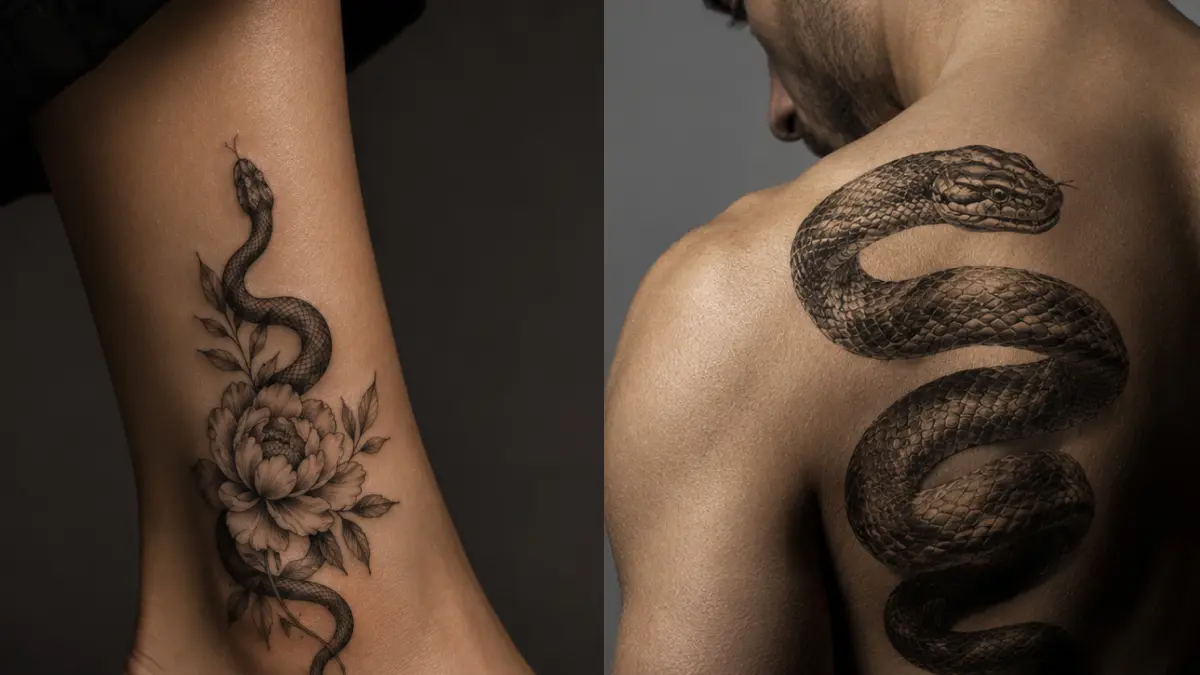
Snake tattoos can be created in many artistic styles, each offering a different visual impression. Fine-line snakes often appear delicate and understated, making them suitable for people who prefer minimal body art. Traditional designs may use bold outlines and strong contrasts, while realistic tattoos emphasize scales, shadows, and anatomical detail. A snake combined with flowers can suggest a relationship between beauty and danger, although the meaning depends on the chosen flower and the wearer’s interpretation. A snake surrounding a dagger may communicate conflict, protection, or the ability to confront challenges. These combinations should not be treated as fixed symbols with one universal meaning. Their value comes from the way the individual elements work together to express the wearer’s intentions.
Choosing a Snake Tattoo With Cultural Awareness
Before choosing a snake tattoo, decide whether you are drawn to its appearance, its symbolism, or a particular cultural tradition. If the design includes sacred figures, historical emblems, or traditional motifs, research their background and seek guidance from knowledgeable artists or cultural sources. Avoid combining unrelated symbols simply because they look attractive together. Think about the size, placement, level of detail, and how the design may age over time. A small snake may suit the forearm, ankle, or upper arm, while a larger composition may follow the shape of the shoulder, back, or leg. The artist should be able to explain what details can realistically be achieved at your preferred size and how to maintain the tattoo after it heals.
Conclusion
Snake tattoos have many possible meanings, ranging from renewal and healing to protection, wisdom, danger, and independence. Ancient Egyptian royal imagery, Greek healing traditions, Hindu mythology, Chinese zodiac symbolism, and Japanese tattoo art each provide different ways to understand the snake. Religious traditions also contain important serpent imagery that may be interpreted in distinct ways. No single meaning applies to every tattoo, and the design’s cultural background should be considered alongside the wearer’s personal intention. By learning about the symbol, choosing an appropriate artistic style, and working with a skilled tattoo professional, you can create a design that communicates a thoughtful message rather than relying on appearance alone.