
The planets are constantly moving through space, changing their positions relative to Earth and the background of distant stars. In astrology, these ongoing movements are known as planetary transits, and they are used to interpret how current planetary positions relate to a person’s birth chart. For people who are new to astrology, transits can seem complicated because they involve several planets, zodiac signs, houses, and mathematical relationships. However, the basic idea is easier to understand once each element is explained separately.
Planetary transits are an important part of many astrological traditions because they provide a way to discuss changing themes over time. Astrologers may use them to interpret periods associated with personal reflection, professional responsibilities, relationships, or new opportunities. These interpretations are based on symbolic astrological beliefs rather than scientifically established predictions. Understanding the distinction between astronomical movements and their astrological meanings helps beginners explore the subject with greater clarity.
What Are Planetary Transits in Astrology?
A planetary transit refers to the movement of a planet through the sky in relation to a particular point or position. In astrology, the term usually describes the current position of a planet compared with the positions recorded in a person’s birth chart. Astrologers examine these relationships to develop interpretations about different periods of life.
A birth chart represents the positions of the Sun, Moon, and planets at the time and place of a person’s birth. Once this chart has been calculated, astrologers can compare it with the changing positions of the planets. The resulting comparison is commonly called a transit chart or transit analysis.
For example, an astrologer might examine the current position of Jupiter in relation to a person’s natal Sun. Within traditional astrological symbolism, this relationship could be interpreted in terms of confidence, development, or expanding ambitions. Another astrologer might focus on different chart factors and offer a different interpretation.
These readings do not demonstrate that planetary movements cause specific personal experiences. Rather, they show how astrology uses the positions of celestial bodies as symbolic reference points for interpreting time and life events.
How Do Planetary Transits Actually Happen?
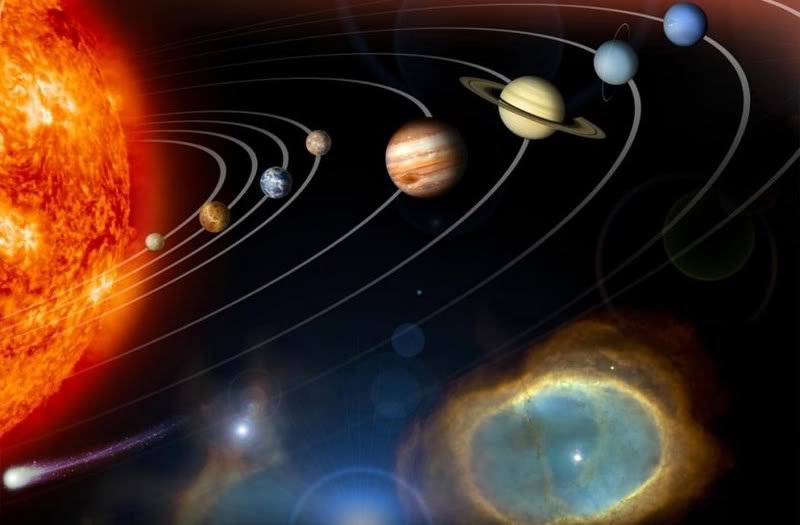
The astronomical movements behind planetary transits can be explained without astrology. Planets travel around the Sun in orbits, and their positions change continuously. Earth also moves around the Sun, which means the apparent positions of other planets in the sky change as well.
Because planets have different orbital periods, they do not move across the sky at the same apparent speed. Mercury travels around the Sun much faster than Saturn, for example, while Neptune takes far longer to complete one orbit. These differences create changing arrangements between the planets as viewed from Earth.
Astronomers can calculate planetary positions using established mathematical models. These calculations allow them to determine where a planet will appear in the sky at a particular time. Astrologers use planetary position data for a different purpose, interpreting the same movements through the symbolic framework of astrology.
The movement itself is an astronomical fact. Claims that a particular arrangement predicts a promotion, relationship change, or emotional experience belong to astrology and have not been established as reliable scientific predictions.
The Difference Between Transits and Birth Charts
A birth chart and a transit chart serve different purposes in astrology. A birth chart records the planetary positions associated with a person’s birth, while transits describe the changing positions of planets at a later time.
The birth chart is generally treated as a fixed reference point. The planets do not remain in the same positions relative to Earth, so astrologers continually compare current planetary locations with the original chart.
Imagine a person whose birth chart shows Venus in a particular zodiac sign. Years later, Venus occupies another position in the sky. An astrologer might examine how the current Venus position relates to the person’s natal Venus or other chart placements. This relationship would form part of a transit interpretation.
The comparison can involve the zodiac signs, astrological houses, and angles formed between planets. The exact interpretation depends on the astrologer’s methods and the tradition being followed.
For beginners, the simplest distinction is that the birth chart provides the original reference, while transits describe the changing planetary positions being compared with it.
What Are the Main Planets Used in Transit Astrology?
Astrologers interpret different planets through different symbolic themes. The speed at which a planet moves also affects how long a transit lasts and how often it occurs.
Mercury and Everyday Communication
Mercury is traditionally associated with communication, reasoning, learning, information, and short journeys. In transit astrology, astrologers may examine Mercury when discussing conversations, study plans, writing projects, or the exchange of ideas.
A Mercury transit might be interpreted as a period for reviewing information or paying attention to communication. However, Mercury’s position cannot reliably predict misunderstandings, examination results, or technical problems.
Venus and Relationships
Venus represents love, attraction, beauty, harmony, pleasure, and personal values in traditional Western astrology. Its transits are often used to discuss romantic interests, social activities, artistic projects, and the ways people appreciate one another.
For example, an astrologer might interpret a Venus transit as symbolically highlighting relationships or enjoyment. Such a reading does not establish that a new romance will begin or that an existing relationship will improve.
Mars and Personal Drive
Mars is associated with action, ambition, physical energy, assertiveness, and competition. Astrologers may interpret Mars transits in relation to motivation, challenges, or the pursuit of goals.
These interpretations can provide a symbolic language for discussing initiative and determination, but they cannot measure an individual’s actual energy levels or predict aggressive behavior.
Jupiter and Growth
Jupiter is traditionally associated with expansion, learning, opportunity, optimism, and broader perspectives. Astrologers often interpret its transits as representing periods of development or exploration.
A Jupiter transit might be connected symbolically with education, travel, or professional ambitions. However, planetary positions do not guarantee success, financial growth, or favorable circumstances.
Saturn and Responsibility
Saturn is commonly associated with discipline, structure, patience, limitations, and responsibility. Its transits are often interpreted as periods that encourage careful planning or greater attention to long-term commitments.
Astrologers may describe these periods as opportunities to examine boundaries and develop consistency. Nevertheless, Saturn cannot scientifically predict hardship, delays, or the outcome of a major life decision.
Uranus, Neptune, and Pluto
In modern Western astrology, Uranus is associated with change and independence, Neptune with imagination and spirituality, and Pluto with transformation and deep psychological themes.
These planets move relatively slowly, so astrologers often interpret their transits as representing longer-term developments. Because the outer planets can remain in similar astrological positions for extended periods, their symbolic interpretations may be applied to broader life themes or entire generations.
Their astrological meanings remain interpretive rather than scientifically verified explanations of individual or collective experiences.
What Are Aspects in Planetary Transit Astrology?
An aspect is an angular relationship between two celestial bodies or between a transiting planet and a point in a birth chart. Astrologers use aspects to organize their interpretations of how planetary positions relate to one another.
Some commonly discussed aspects include conjunctions, oppositions, squares, trines, and sextiles. Each describes a particular angle between two positions. A conjunction occurs when two bodies appear close together in zodiacal longitude, while an opposition places them approximately opposite one another. Squares, trines, and sextiles correspond to other traditional angular relationships.
Within astrology, these aspects are assigned symbolic meanings. A trine may be interpreted as harmonious, while a square may be described as challenging. A conjunction is generally interpreted according to the planets involved and the astrological tradition being used.
For example, an astrologer might interpret a transit involving Saturn and the natal Sun as a symbol of responsibility or personal evaluation. The interpretation may differ depending on the aspect, the chart, and the astrologer’s approach.
These angles are mathematically describable, but the meanings assigned to them are not scientifically established indicators of future events. They are part of the interpretive structure used by astrologers.
How Long Do Planetary Transits Last?
The duration of a transit depends on the planet involved, its apparent speed, the aspect being considered, and the range of influence an astrologer chooses to use.
The faster-moving planets, including Mercury, Venus, and Mars, generally pass through particular zodiac positions more quickly than the outer planets. Their transits may last for days or weeks, depending on the method of interpretation.
Jupiter and Saturn move more slowly, so their transits can remain relevant within an astrological interpretation for months. Uranus, Neptune, and Pluto move even more slowly and may remain in the same zodiac sign for years.
Retrograde motion can complicate the timing. When a planet appears to reverse its direction from Earth’s perspective, it may pass over the same astrological degree more than once. Astrologers sometimes interpret these repeated passages as separate stages of a broader transit.
The exact timing depends on the planetary positions and the astrological criteria being used. Beginners should consult current astronomical or astrological ephemerides rather than relying on dates copied from older material.
What Are Retrograde Transits?
Retrograde motion occurs when a planet appears to move backward against the background of distant stars as observed from Earth. This is an apparent effect caused by the changing relative positions and orbital motions of Earth and the other planet.
In astrology, retrograde periods are often interpreted through themes of review, reconsideration, and revisiting earlier matters. Mercury retrograde is particularly well known, but other planets can also appear retrograde.
When a transiting planet changes direction in apparent motion, it may cross the same degree of a birth chart several times. Astrologers may describe the first passage as an initial development, a later passage as a period of reconsideration, and a final passage as a time to move forward. These are interpretive conventions rather than scientifically demonstrated stages of personal change.
Retrograde motion does not mean a planet physically reverses its orbit around the Sun. It is also not proof that everyday problems become more frequent. Understanding the astronomical explanation helps separate the observable event from the meanings astrology assigns to it.
How Astrologers Use Transits in Everyday Readings
Transit astrology is often used to discuss timing and changing themes. Some astrologers prepare daily, monthly, or yearly forecasts by examining the movements of planets and comparing them with general zodiac placements or individual birth charts.
A personal transit reading may begin with the current planetary positions. The astrologer then identifies aspects to the natal planets and determines which houses are involved. These factors are combined to create an interpretation of the period.
For example, an astrologer might examine a Jupiter transit involving the tenth house, which is traditionally associated with career and public responsibilities. The resulting interpretation might focus on professional development or broader ambitions. Another astrologer could emphasize different factors and reach a different conclusion.
Because interpretations vary, transit readings should not be treated as precise forecasts. They cannot reliably determine the best date to resign from a job, invest money, start a relationship, or make a major medical decision.
If someone enjoys transit astrology, it can be used as a prompt for reflection. Reviewing goals, considering priorities, and evaluating available options are useful practices regardless of planetary positions.
How Beginners Can Start Understanding Planetary Transits
Learning transit astrology becomes more manageable when approached gradually. Beginners can start by understanding the difference between planets, zodiac signs, houses, and aspects before attempting to interpret a complete chart.
First, learn the traditional symbolism of the major planets. Next, explore how zodiac signs and houses are used in Western astrology. Once those concepts become familiar, examine how current planetary positions compare with the placements in a birth chart.
It can also help to keep a journal of astrological interpretations alongside real-life observations. Rather than assuming that a transit caused an event, record what happened and consider other explanations. This encourages critical thinking and makes it easier to distinguish personal impressions from reliable evidence.
Avoid making important choices solely on the basis of transit forecasts. Career changes, financial commitments, relationship decisions, and health concerns deserve careful consideration of practical circumstances and trustworthy information.
A thoughtful approach allows beginners to learn the vocabulary of astrology without treating every interpretation as a definite statement about their future.
Planetary Transits and Scientific Evidence
Astronomy and astrology approach planetary movements in different ways. Astronomy studies celestial objects using observation, mathematics, and physical theories. Planetary positions and apparent retrograde motion can be calculated and observed with considerable precision.
Astrology interprets those positions through symbolic associations with personality, relationships, and life events. Although astrology has a long cultural history and remains popular, scientific research has not established that planetary transits reliably predict individual experiences or future outcomes.
People may find astrological interpretations personally meaningful, but meaningful reflection is not the same as evidence that celestial positions cause specific events. Expectations, selective attention, and confirmation bias can also influence how people interpret experiences that appear to match a forecast.
Recognizing these distinctions allows readers to explore astrology with curiosity while relying on evidence-based methods for decisions that affect their lives.
Final Thoughts
Planetary transits are an essential concept in many astrological traditions because they connect current planetary positions with the fixed reference of a birth chart. Astrologers interpret the movements of Mercury, Venus, Mars, Jupiter, Saturn, and the outer planets through symbolic themes involving communication, relationships, ambition, responsibility, and personal development.
Understanding the basics does not require memorizing every aspect or mastering advanced chart calculations. Learning the role of each planet, recognizing the difference between natal placements and current positions, and becoming familiar with the twelve houses provides a useful foundation.
Most importantly, planetary transits should be understood in their proper context. The movements of planets are astronomical facts, while claims about their influence on human affairs remain astrological interpretations without established scientific reliability. By combining curiosity with critical thinking, beginners can explore transit astrology thoughtfully while making real-world decisions through sound judgment and dependable information.