
Astrology has fascinated people for centuries, offering a symbolic way to explore personality, relationships, emotions, and personal development. One of the most important tools in astrology is the birth chart, also called a natal chart. This chart represents the positions of the Sun, Moon, planets, and other astrological points at the time and place of a person’s birth. Although a birth chart may initially look complicated, its basic structure becomes easier to understand when you learn the purpose of its three main components. Planets describe different psychological functions, zodiac signs represent the styles through which those functions are expressed, and houses connect astrological symbolism with different areas of life. Understanding how these elements work together provides a useful starting point for anyone interested in learning astrology.
What Is a Birth Chart?
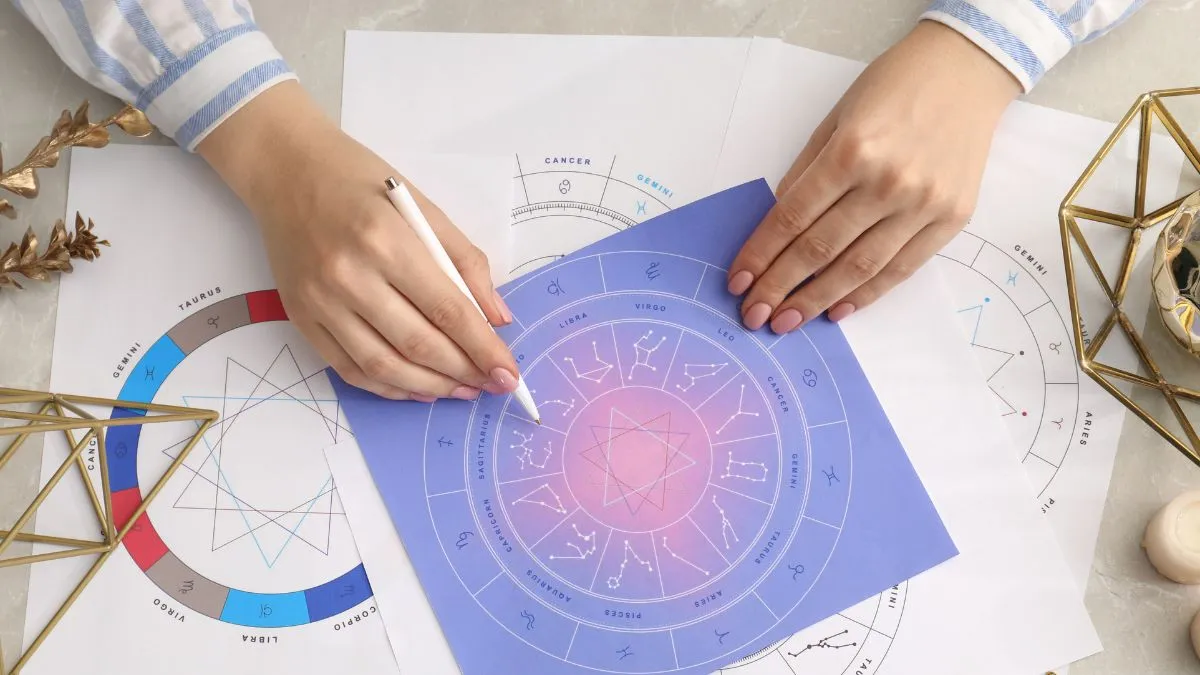
A birth chart is a circular diagram created using a person’s birth date, birth time, and birthplace. Astrologers use this information to calculate the positions of celestial bodies and map them onto the twelve zodiac signs and twelve astrological houses. The chart is traditionally interpreted as a symbolic picture of the sky at the moment of birth. An accurate birth time is especially useful because the Ascendant and house positions can change during the day. If the birth time is unknown, some parts of the chart may still be interpreted, but the house system and rising sign may be uncertain. It is important to understand that astrology is a belief-based interpretive system rather than a scientifically established method for determining personality or predicting life events. Many people nevertheless explore birth charts as a form of reflection, storytelling, or personal interest.
Understanding the Planets in Astrology
In astrology, planets represent different functions, needs, and themes in human experience. The Sun is associated with identity, purpose, and conscious self-expression, while the Moon is connected with emotions, comfort, and instinctive reactions. Mercury traditionally represents communication and thinking, Venus relates to affection and values, and Mars symbolizes action, motivation, and assertion. Jupiter is associated with growth and opportunity, whereas Saturn represents structure, responsibility, and limitations. Modern Western astrology also commonly interprets Uranus through change and independence, Neptune through imagination and idealism, and Pluto through transformation and power. These meanings are symbolic interpretations used by astrologers. When reading a chart, avoid assigning a complete personality description to one planet alone. Its zodiac sign, house placement, and relationships with other planets all contribute to the traditional interpretation.
Learning the Twelve Zodiac Signs
The zodiac signs describe the qualities through which planetary functions are expressed. Aries is commonly associated with initiative and directness, while Taurus is linked with stability and persistence. Gemini is associated with curiosity and communication, and Cancer with emotional sensitivity and security. Leo is traditionally connected with creativity and self-expression, while Virgo emphasizes analysis and practical improvement. Libra is linked with balance and relationships, Scorpio with intensity and depth, and Sagittarius with exploration and broader perspectives. Capricorn is associated with ambition and structure, Aquarius with independence and collective ideas, and Pisces with imagination and compassion. These descriptions are broad astrological themes rather than proven facts about everyone born under a particular sign. A birth chart contains several signs, so a person’s astrological profile is more complex than the Sun sign commonly discussed in horoscopes.
What Are the Twelve Astrological Houses?
The twelve houses divide the birth chart into areas traditionally associated with different aspects of life. The First House concerns identity, personal presentation, and beginnings. The Second House is connected with possessions, resources, and personal values, while the Third House relates to communication, learning, and nearby surroundings. The Fourth House represents home, family, and roots. The Fifth House is associated with creativity, romance, pleasure, and self-expression, while the Sixth House concerns routines, work habits, service, and everyday well-being. The Seventh House focuses on partnerships, the Eighth House on shared resources and deeper transitions, and the Ninth House on education, philosophy, travel, and broader perspectives. The Tenth House is traditionally associated with career and public reputation, the Eleventh House with friendships and groups, and the Twelfth House with solitude, reflection, and hidden matters. Interpretations differ among astrological traditions, so these meanings are best treated as a general introduction.
How Planets, Signs, and Houses Work Together
The most useful principle for beginners is that planets, signs, and houses answer different questions. A planet indicates the function being interpreted, a sign describes its symbolic style, and a house identifies the life area in which that combination is emphasized. For example, Mercury in Leo in the Third House might be interpreted as communication that is expressive and confident, with particular emphasis on learning, conversation, or sharing ideas. Venus in Taurus in the Second House might be associated with steady values, appreciation for comfort, and attention to personal resources. These are examples of traditional astrological interpretation, not objective assessments of a person’s behavior. Reading the components together provides more context than looking at a planet or sign in isolation. It also encourages beginners to think about how different symbols interact rather than memorizing disconnected definitions.
Understanding the Sun and Moon Placements
The Sun and Moon are often among the first placements people learn to interpret. The Sun sign is usually associated with conscious identity, personal direction, and the qualities someone may want to develop. The Moon sign is traditionally connected with emotional responses, private needs, and the ways a person seeks comfort. Someone with a Sun in Capricorn and a Moon in Gemini might explore the contrast between a preference for structure and a need for variety or mental stimulation. This combination does not guarantee that the person will behave in a particular way. Instead, astrology offers a symbolic framework for considering different motivations. When reading these placements, look at their signs and houses, then consider whether the traditional descriptions offer a useful perspective on your experiences.
What Is the Ascendant?
The Ascendant, also called the rising sign, is the zodiac sign that was rising over the eastern horizon at the location and time of birth. It is a central part of many Western astrological systems and determines the starting point of the First House in common house systems. Astrologers often associate it with first impressions, outward presentation, and the way someone approaches unfamiliar situations. Because the Ascendant changes relatively quickly, an accurate birth time is important for calculating it. A chart with an incorrect birth time may show a different rising sign or different house placements. Beginners should therefore check the birth information before interpreting this part of the chart. The Ascendant is not a replacement for the Sun or Moon sign but another symbolic component of the overall picture.
Understanding Planetary Aspects
Planetary aspects describe the angular relationships between planets in a birth chart. Astrologers interpret these angles as symbolic connections that may suggest cooperation, tension, or different kinds of emphasis between planetary functions. A conjunction occurs when two planets are close together by zodiacal longitude. A trine traditionally represents an angle of about 120 degrees and is often interpreted as supportive, while a square is approximately 90 degrees and is commonly associated with challenge or friction. An opposition occurs around 180 degrees and may be interpreted through themes of contrast or balance. Other aspects, including sextiles, are also used in chart interpretation. Beginners do not need to memorize every aspect immediately. It is more helpful to understand the major ones gradually and avoid assuming that an aspect automatically determines a person’s choices or future.
A Simple Method for Reading Your First Birth Chart
Start by confirming your birth date, time, and location, then use a reputable chart calculator to generate the diagram. Identify the Sun, Moon, and Ascendant before moving to other planets. Write down each placement’s planet, sign, and house, if the house information is available and reliable. Next, read a basic explanation of each component and consider how the themes relate to one another. Avoid trying to interpret every planetary aspect at once, because too much information can make the chart confusing. Choose two or three placements and explore them in more detail before expanding your reading. It may also help to keep a journal of the symbols you find meaningful, while remembering that a description does not have to fit you simply because it appears in an astrological guide.
Common Mistakes Beginners Should Avoid
One common mistake is assuming that the Sun sign explains an entire personality. In astrology, the birth chart includes many placements, and even traditional interpretations depend on context. Another mistake is treating challenging symbols as evidence that something negative must happen. Astrological language often uses terms such as tension, restriction, or transformation, but these words should not be treated as guaranteed predictions. Beginners may also confuse zodiac signs with houses, even though they serve different roles in chart interpretation. Finally, avoid using astrology as a substitute for medical advice, financial planning, or other decisions that require reliable evidence. It can be explored as a cultural tradition or personal reflection tool without allowing symbolic interpretations to replace practical judgment.
Conclusion
Learning to read a birth chart becomes more manageable when you begin with the relationship between planets, zodiac signs, and houses. Planets represent symbolic functions, signs describe how those functions are expressed, and houses connect them with particular areas of life. The Ascendant and planetary aspects add further layers of interpretation, but they do not need to be mastered immediately. Start with the main placements, check your birth information, and build your understanding gradually. By approaching astrology with curiosity and a balanced perspective, beginners can explore its symbolism without assuming that a chart determines their personality, choices, or future. The most useful reading is one that encourages thoughtful reflection rather than rigid conclusions.