
For centuries, travelers have told stories about strange lights appearing over marshes, wetlands, and lonely countryside paths. These mysterious glows were sometimes described as floating flames that moved ahead of a traveler, disappeared unexpectedly, or seemed to lead people away from familiar routes. In European folklore, one of the best-known names for these lights is will-o’-the-wisp. Similar stories appear under different names in other cultures, often involving wandering spirits, lost souls, or supernatural tricksters. The lights became especially fascinating because they seemed to appear in places where visibility was poor and ordinary explanations were difficult to identify. Modern science offers possible explanations for some reports of unusual lights, but the historical stories remain valuable examples of how people interpreted strange experiences before they understood many natural phenomena.
What Is a Will-o’-the-Wisp?
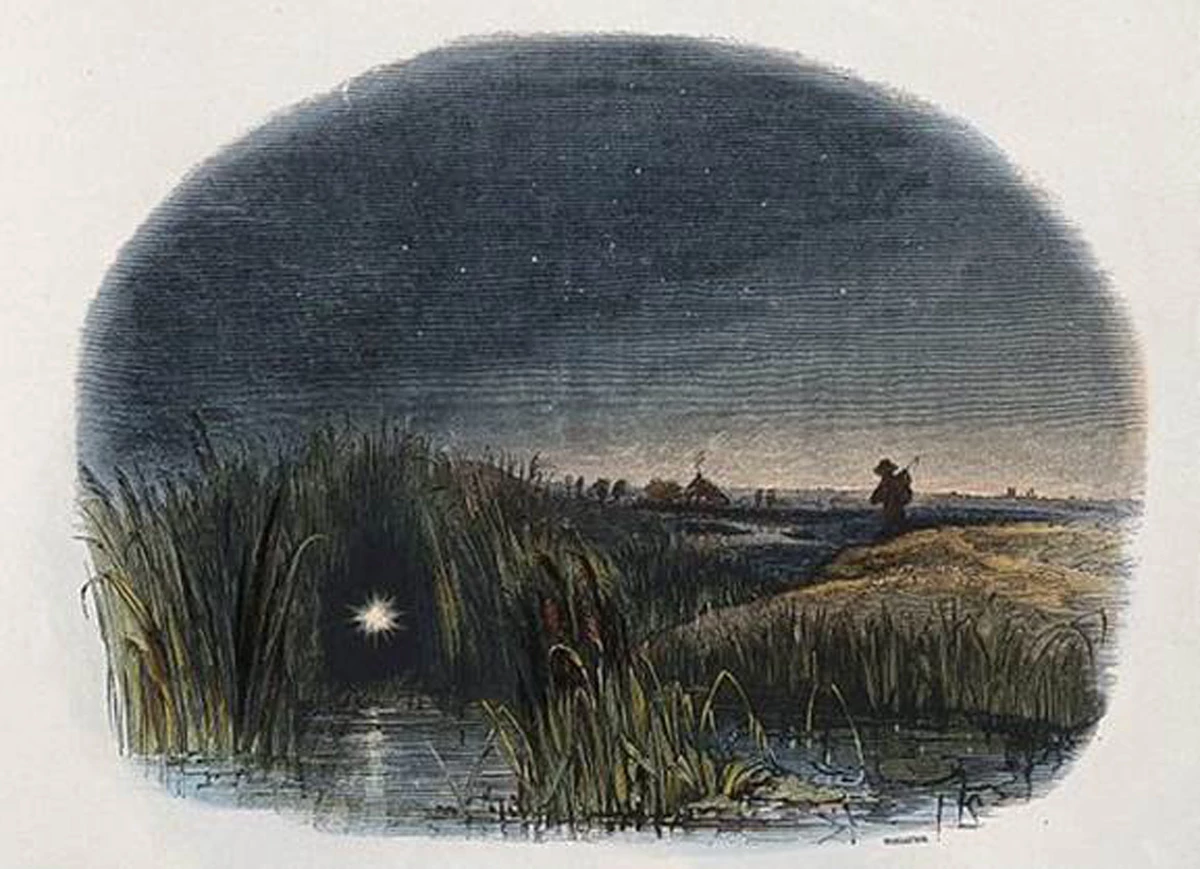
A will-o’-the-wisp is a traditional name for a mysterious light reported over wetlands, marshes, and other dark landscapes. Folklore often describes it as a small flame or glowing point that appears to move independently, sometimes guiding travelers away from safety. The appearance varies between stories. In some accounts, the light is distant and faint, while in others it seems close enough to follow. The name is especially associated with English-language folklore, although similar phenomena have been described in many other parts of the world. The term is sometimes used more broadly for unexplained wandering lights. Historical reports do not all describe the same event, and it would be incorrect to assume that every story has one identical cause. Some accounts may reflect natural observations, while others developed through storytelling and imagination.
The Origins of the Name
The phrase will-o’-the-wisp is generally understood as referring to a person or figure carrying a wisp of light, with the name Will functioning as a familiar personal name. A wisp can mean a small bundle or strand, and in the folklore expression it suggests a faint flame or glowing object. Another common term is ignis fatuus, a Latin expression often translated as foolish fire. The name reflects the belief that the light could mislead people who followed it. Rather than helping travelers reach their destination, the mysterious glow was said to draw them into marshes, muddy ground, or dangerous places. The wording captures the central theme of the legend, which is not simply the existence of a strange light but the possibility that something seemingly helpful may lead a person astray.
European Folklore and the Wandering Light
In European stories, will-o’-the-wisps were often associated with wetlands, bogs, and lonely paths. These environments could be dangerous for travelers, especially before reliable maps, streetlights, and modern transport were available. Soft ground, hidden water, fog, and uneven terrain created real risks after dark. A distant light might appear to offer direction, but following it without understanding the landscape could lead someone into trouble. Folklore transformed this danger into a memorable supernatural narrative. In some versions, the light was a mischievous spirit that deliberately deceived travelers. In others, it was connected with the restless dead or people who had committed wrongdoing in life. The details varied across regions, demonstrating how communities adapted the same basic image to their own religious beliefs, landscapes, and storytelling traditions.
The Legend of Jack-o’-Lantern
One well-known story connected with wandering lights involves a figure called Stingy Jack in Irish folklore. In popular retellings, Jack is a clever but morally questionable man who repeatedly tricks the Devil. After his death, he is said to be unable to enter heaven and is also refused entry to the otherworldly place he expected to reach. He is left wandering with a burning ember carried inside a hollowed turnip or another makeshift lantern. This story is often used to explain the name Jack-o’-Lantern and is connected in modern storytelling with the tradition of carving pumpkins. Versions of the legend vary, and it should not be treated as a single historically verified account. Its importance lies in the way it connects a wandering light with moral choices, punishment, and the unsettling idea of a soul unable to find rest.
The Connection Between Wandering Lights and Lost Souls
Many cultures have stories about spirits that cannot find peace or remain connected to the places where they lived. In some versions of will-o’-the-wisp folklore, the light is interpreted as the soul of a person who died under unusual circumstances or committed a serious wrong. Such explanations reflect older beliefs about the afterlife and the possibility that certain people might remain in a restless state. The light becomes a visible sign of an invisible story, allowing listeners to imagine the presence of someone who has not completed a journey. These interpretations often vary according to local religious traditions. They are cultural explanations rather than evidence that unexplained lights are supernatural souls. Nevertheless, the association between lights and the dead has helped make the legend emotionally powerful and memorable.
Similar Lights in Other Cultures
The basic idea of a mysterious light that appears in the darkness is not limited to England or Ireland. Different cultures have stories about wandering lights, ghostly flames, or strange glowing objects in fields, forests, and wetlands. The names, meanings, and supposed causes vary widely. Some traditions associate the lights with spirits, while others connect them with treasure, warnings, or unusual creatures. In Japan, for example, folklore includes numerous mysterious phenomena involving strange lights, although these should not all be treated as direct equivalents of the European will-o’-the-wisp. Similar visual experiences can inspire different stories depending on local beliefs and landscapes. Comparing these traditions can reveal common human responses to uncertainty without assuming that every culture shares the same explanation.
Could Natural Phenomena Explain the Lights?
Scientists have proposed several possible explanations for reports of mysterious lights over wetlands. One traditional hypothesis links them with gases released by decaying organic matter, including methane and other compounds. However, the idea that marsh gas commonly produces spontaneous visible flames under ordinary outdoor conditions is not a complete or firmly established explanation for historical will-o’-the-wisp reports. Methane alone does not readily ignite under all the conditions imagined in popular accounts, and the chemistry of natural wetlands is more complicated than simple folklore explanations suggest. Other possibilities include unusual atmospheric effects, distant artificial lights, reflections, bioluminescence in certain organisms, and visual misinterpretation in darkness. These explanations may account for some observations but do not establish a single cause for every report. Many historical accounts lack enough detail to determine what the observer actually saw.
Why Marshes and Wetlands Became Part of the Legend
Wetlands provide an effective setting for mysterious-light stories because their physical conditions can make nighttime travel confusing. Fog may reduce visibility, water can reflect distant light, and uneven ground can hide hazards. Before modern lighting and detailed navigation tools, travelers sometimes relied on familiar landmarks, moonlight, or visible lights from homes and settlements. A small glow appearing in an unexpected location could therefore attract attention and create uncertainty. Wetlands also contain decaying vegetation and complex natural processes that were not always well understood in earlier periods. These environmental features made marshes suitable settings for stories about spirits and deceptive lights. The landscape itself helped the legend feel believable because it combined real physical dangers with an atmosphere of mystery.
The Role of Weather and Human Perception
Weather and perception can influence how distant lights appear. Fog, mist, humidity, and atmospheric conditions may blur a light’s outline or make it seem detached from its actual source. A person moving through darkness may also misjudge distance, direction, or speed, particularly when familiar reference points are absent. When a light shifts behind vegetation or disappears from view, it may appear to be moving deliberately even if its source is stationary. Human vision works differently in low-light conditions, and uncertainty can make ambiguous shapes and movements seem more meaningful. These factors do not explain every historical report, but they show why an unusual nighttime observation does not automatically require a supernatural cause. The experience may be striking even when its origin remains unknown.
How Will-o’-the-Wisp Stories Warned Travelers
A central feature of the legend is the danger of following a light that appears to offer guidance. In some stories, a traveler sees a glow in the distance and moves toward it, only to discover that the path leads into a swamp or dangerous ground. The narrative creates a memorable warning against trusting appearances without understanding the surroundings. Such stories may have encouraged people to remain on known routes, avoid isolated wetlands after dark, and travel with companions when possible. A supernatural explanation could make the warning more compelling than a simple instruction about unsafe terrain. Even today, the basic lesson remains practical. An unfamiliar light in a remote area should not automatically be treated as a safe destination, especially when the ground is uneven or visibility is limited.
Will-o’-the-Wisp in Literature and Popular Culture
The mysterious light has appeared in poetry, fiction, theatre, games, and fantasy storytelling. Writers often use it as a symbol of temptation, illusion, uncertainty, or a goal that remains just beyond reach. A character who follows a will-o’-the-wisp may be pursuing something that looks promising but ultimately leads away from the intended destination. The image can therefore work as a metaphor for false hope or misleading ambition. In fantasy stories, the light may be portrayed as an intelligent creature or magical guide, while horror narratives often emphasize its ability to lure people into danger. These modern portrayals borrow from older folklore but frequently add new characteristics to suit the story. The continued popularity of the motif demonstrates how a simple visual mystery can support many different interpretations.
Separating Folklore From Scientific Evidence
Folklore and science approach unexplained lights in different ways. Folklore preserves the stories people used to interpret unusual experiences, including their beliefs about spirits, morality, and dangerous places. Scientific investigation attempts to identify observable causes through evidence, measurement, and repeatable observation. These approaches can be discussed together without confusing their purposes. A story about a wandering spirit may be culturally important even when there is no scientific evidence for its supernatural explanation. Likewise, a possible natural explanation for a particular light does not mean that every historical story has been solved. Responsible research acknowledges uncertainty, avoids claiming more than the evidence supports, and recognizes that legends can have historical and literary value independent of whether their supernatural elements are true.
Conclusion
Will-o’-the-wisp stories combine mysterious lights, dangerous landscapes, and the human desire to explain unfamiliar experiences. European folklore often portrayed the lights as deceptive spirits or wandering souls, while similar traditions in other cultures developed their own explanations for unusual nighttime glows. Modern research offers possible natural causes for some reports, including atmospheric effects, reflections, distant lights, and misinterpretation in darkness, but no single explanation accounts for every historical account. The legend has also become a lasting literary symbol of temptation and misleading promises. By examining both the cultural stories and the possible natural conditions behind them, readers can appreciate the will-o’-the-wisp as an important part of folklore without assuming that every mysterious light has a supernatural origin.