Design has always been closely connected with the way people live, communicate, work, and express ideas. From traditional drawings and printed materials to websites, mobile applications, digital advertisements, and immersive experiences, design has changed dramatically over time. Today, the creative industry is entering another important stage where technology, human creativity, artificial intelligence, and changing audience expectations are coming together.
The new era of digital and creative design is not simply about making something attractive. Modern design focuses on creating experiences that are useful, memorable, accessible, and emotionally engaging. Designers are now expected to understand technology, user behavior, visual communication, branding, and sometimes even data. This broader approach has created exciting opportunities for both professional designers and people who are learning creative skills.
As digital platforms continue to expand, design trends are also evolving faster than ever. A style that becomes popular today can quickly be replaced by a new visual direction tomorrow. However, some important principles are becoming increasingly clear. Simplicity, personalization, motion, authenticity, accessibility, and intelligent technology are shaping the future of creative work.
The Shift Toward More Human Design
One of the most noticeable changes in modern design is the growing focus on human experiences. For many years, digital design was strongly influenced by technical limitations. Designers had to work around fixed screen sizes, limited processing power, and basic interaction methods. Modern devices have removed many of these restrictions.
This freedom allows designers to create experiences that feel more natural and personal. Instead of filling a page with information, designers can guide users through content in a clear and comfortable way. Colors, typography, images, animations, and spacing are carefully selected to support the user’s journey.
Human-centered design also means understanding what people actually need. A visually impressive website can still fail if visitors cannot find important information quickly. Similarly, an attractive application may receive poor feedback if its navigation is confusing.
The new design mindset therefore places usefulness alongside beauty. The best creative work often succeeds because it makes people feel comfortable while helping them accomplish a specific goal.
Minimalism Is Becoming More Flexible
Minimalism remains an important influence in digital design, but modern minimalism is becoming more expressive. Earlier minimalist designs often relied heavily on plain backgrounds, simple layouts, limited colors, and strict spacing.
Today, designers are experimenting with a broader interpretation of simplicity. A minimal interface may include bold typography, subtle gradients, unusual shapes, large photography, or carefully controlled animation. The goal is not to remove every decorative element. Instead, the goal is to remove unnecessary distractions while keeping the design visually interesting.
This approach is particularly useful for websites and mobile applications. When users encounter too many visual elements, they can become overwhelmed. A cleaner structure allows important information to stand out naturally.
Modern minimalism also creates flexibility for brands. A simple visual system can be adapted across websites, social media, packaging, advertisements, and digital products without losing its identity.
The Rise of Motion and Interactive Experiences
Static design is no longer the only way to communicate visually. Motion has become a major part of digital creativity. Small animations can explain an action, provide feedback, attract attention, or make a digital experience feel more alive.
For example, a button can subtly change when someone interacts with it. A page can reveal information as the user scrolls. An illustration can move gently to explain a concept. These small details can create a stronger connection between the user and the digital environment.
More advanced projects are also using interactive storytelling. Instead of presenting information in a traditional sequence, designers can allow users to explore content through scrolling, clicking, movement, and other interactions.
However, motion needs to be used carefully. Too many animations can slow down a website or make navigation uncomfortable. Effective motion should have a purpose rather than simply existing for decoration.
Artificial Intelligence and the Creative Process
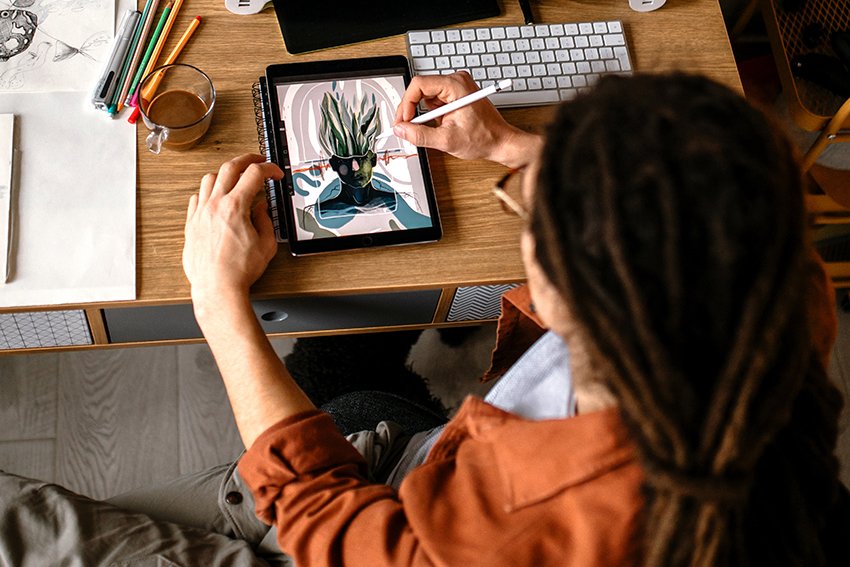
Artificial intelligence is becoming one of the most influential technologies in modern creative industries. Designers can now use intelligent tools to generate ideas, explore visual directions, create variations, remove backgrounds, enhance images, organize information, and speed up repetitive tasks.
This does not necessarily mean that human designers are becoming unnecessary. Instead, the role of the designer is changing. Creative professionals can spend less time on repetitive production work and more time thinking about concepts, strategy, storytelling, and user experience.
AI can also help beginners experiment with ideas that might otherwise require advanced technical skills. Someone with limited design experience can explore different visual concepts and learn by comparing results.
At the same time, human judgment remains extremely important. AI-generated content may contain inconsistencies, generic visual choices, or ideas that do not fit a particular audience. Designers still need to evaluate quality and make thoughtful decisions.
The future of creative work will likely involve collaboration between human imagination and intelligent technology rather than complete dependence on either one.
Personalized Visual Experiences
People increasingly expect digital platforms to understand their interests. Personalization has therefore become an important part of modern design.
A personalized experience may change the information, recommendations, layout, or visual content presented to different users. This can make digital platforms feel more relevant and useful.
For designers, personalization creates a new challenge. A design system must be flexible enough to support different types of content while maintaining a consistent identity.
This is especially important for large digital platforms where millions of people may interact with the same service in different ways. Good design must balance consistency with individual relevance.
Bold Typography Is Taking Center Stage
Typography has become much more than a method of displaying readable text. Large and expressive lettering is now frequently used as a major visual element.
Bold typography can immediately communicate personality. A strong typeface may make a brand feel modern, energetic, elegant, playful, or professional. Designers are increasingly using typography as a visual statement rather than simply placing text within a layout.
Oversized headlines, creative letter spacing, variable fonts, and unusual combinations are becoming common across websites and digital campaigns.
However, creativity should never completely replace readability. A beautiful typeface has little value if users struggle to understand the message. Successful typography combines personality with clear communication.
Authenticity Is Becoming More Valuable
Audiences have become more familiar with highly polished digital content. As a result, overly perfect visuals can sometimes feel distant or artificial.
Authentic design is becoming increasingly attractive because it can create a stronger emotional connection. Real photography, imperfect textures, natural expressions, handmade elements, and personal storytelling can make a brand feel more approachable.
This does not mean that professional design is disappearing. Instead, designers are finding ways to combine professional quality with a sense of personality and realism.
Brands that communicate honestly can often build stronger relationships with their audiences than those that focus only on appearing perfect.
The Influence of 3D Design
Three-dimensional design has also become more accessible. Improved software, powerful computers, and AI-assisted creative tools allow designers to produce detailed 3D objects, environments, characters, and product visualizations.
Three-dimensional elements can make digital experiences feel deeper and more immersive. They are especially useful in product presentations, advertising, gaming, entertainment, architecture, and educational content.
Designers are also combining 3D objects with traditional two-dimensional layouts. This creates a visual style where realistic objects appear alongside typography, illustrations, and graphic shapes.
As technology becomes easier to use, 3D design will likely become a more common part of everyday digital communication.
Accessibility Is Becoming Essential
Modern design is also becoming more inclusive. Designers are paying greater attention to people with different abilities, devices, languages, and levels of digital experience.
Accessible design can include readable typography, sufficient contrast, clear navigation, descriptive labels, captions, keyboard-friendly interactions, and layouts that work across different screen sizes.
Accessibility benefits everyone. A clear interface is not only useful for someone with a disability. It can also help people using a small screen, poor internet connection, bright sunlight, or unfamiliar technology.
This makes accessibility more than a technical requirement. It is becoming an important creative principle that encourages designers to think about a wider range of users.
Digital Design Is Becoming More Sustainable
Sustainability is another area influencing the creative industry. Digital products may not appear to have a physical environmental impact, but websites, applications, servers, devices, and digital infrastructure all consume energy.
Designers are beginning to consider performance as part of their creative decisions. Optimized images, efficient animations, lightweight pages, and simplified digital experiences can reduce unnecessary resource consumption while also improving loading speed.
In physical design, sustainability is influencing packaging, materials, printing methods, and product development. Designers are exploring recyclable materials, reusable packaging, and production methods that create less waste.
The connection between design and sustainability is likely to become stronger as businesses and consumers become more environmentally conscious.
The Growth of Immersive Design
Virtual reality, augmented reality, and other immersive technologies are opening new possibilities for creative professionals. Instead of viewing content through a traditional screen, users can interact with digital environments in more direct ways.
Immersive design can be used for education, entertainment, product demonstrations, training, architecture, tourism, and many other areas.
These technologies require designers to think differently because users are no longer simply looking at a fixed interface. They may move around an environment, interact with objects, or receive information from different directions.
This creates a new creative field where spatial thinking becomes as important as traditional graphic design skills.
Social Media Continues to Shape Design
Social media has dramatically changed how visual content is created and consumed. Designers must now consider multiple screen sizes, short attention spans, vertical formats, fast-moving trends, and constantly changing platform requirements.
A successful social media design needs to communicate its main idea quickly. Strong visuals, readable typography, recognizable branding, and clear messaging can help content stand out among thousands of competing posts.
Short-form video has also increased the importance of motion graphics. Designers are increasingly combining graphic design, animation, photography, sound, and video into single creative experiences.
This blending of different disciplines is one of the defining characteristics of the modern creative industry.
The Importance of Design Systems
As digital products become more complex, design systems are becoming increasingly important. A design system provides reusable visual and functional elements that help maintain consistency across different parts of a product or brand.
Instead of designing every button, card, icon, or heading from scratch, teams can use established components. This saves time and creates a more consistent user experience.
Design systems are particularly valuable for large companies that manage websites, mobile applications, advertising campaigns, and other digital platforms simultaneously.
They also allow designers and developers to work together more efficiently.
Creativity Still Matters Most
Technology can change the tools available to designers, but creativity remains at the center of successful design. A powerful software application cannot automatically produce meaningful ideas without thoughtful direction.
Creative thinking involves asking questions, observing people, understanding problems, exploring possibilities, and connecting ideas in unexpected ways.
The strongest designers are not necessarily those who know every tool. They are often the people who understand why a design should exist and how it can communicate something meaningful.
As technology continues to evolve, creative thinking will become even more valuable because tools can be learned and replaced, while the ability to develop original ideas remains deeply human.
What the Future May Look Like
The future of digital and creative design will likely be more interactive, personalized, intelligent, and immersive. Designers will work with increasingly advanced technologies while continuing to focus on human needs.
Artificial intelligence may handle more repetitive tasks. Three-dimensional environments may become easier to create. Personalized experiences may become more common. Accessibility may become a standard expectation rather than an additional feature.
At the same time, people will continue to appreciate authenticity and emotional storytelling. This creates an interesting balance between advanced technology and human expression.
The most successful designers will likely be those who can move comfortably between these two worlds. They will understand modern tools without allowing technology to control their creative thinking.
A New Creative Chapter
The new era of digital and creative design is not defined by one specific style. Instead, it is shaped by a combination of technologies, cultural changes, user expectations, and creative experimentation.
Modern design is moving beyond simple visual decoration. It is becoming a complete experience that combines usefulness, emotion, interaction, accessibility, storytelling, and technology.
For designers, this transformation brings both challenges and opportunities. New tools require continuous learning, but they also make it possible to explore ideas that were once difficult or expensive to produce.
The future belongs to design that can connect technology with people in meaningful ways. Whether through a simple website, an interactive application, a social media campaign, a three-dimensional environment, or an AI-assisted creative project, good design will continue to influence how people understand and experience the digital world.
As the boundaries between technology and creativity continue to disappear, design is entering a fascinating new chapter. The tools may keep changing, but the central purpose remains the same. Great design should communicate clearly, solve problems effectively, and create experiences that people remember.