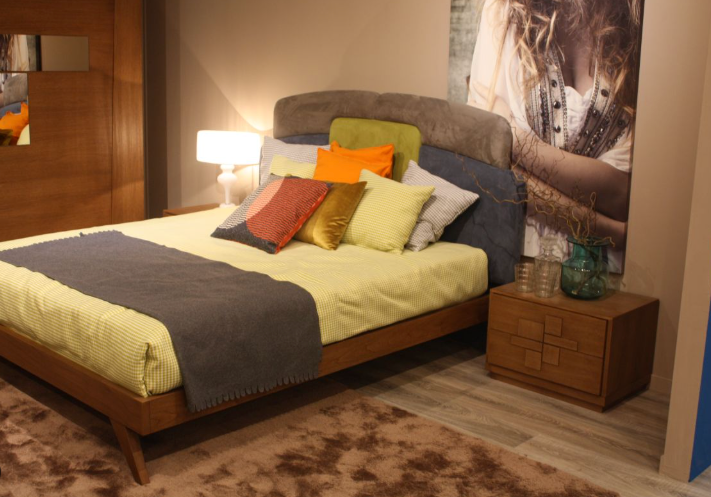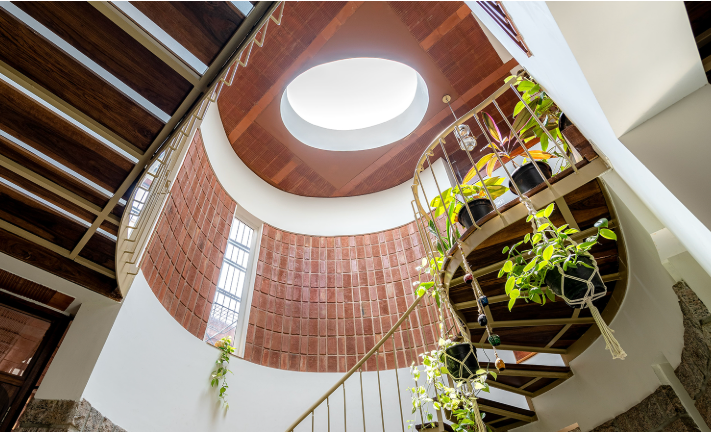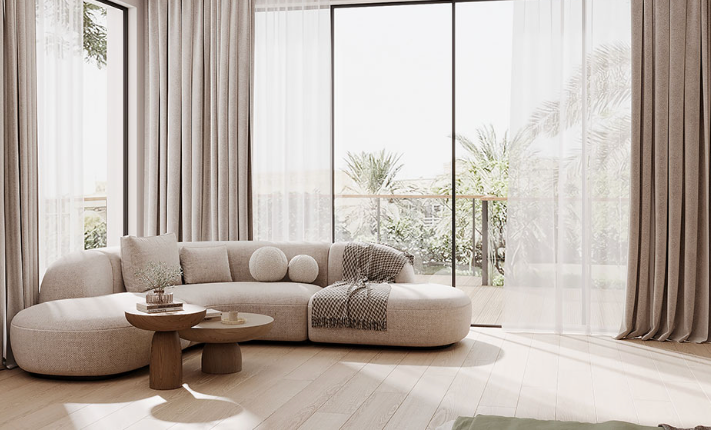
Some rooms feel right the moment you walk in. Nothing feels out of place, nothing feels too heavy on one side, and your eyes don’t struggle to settle anywhere. Other rooms, even if they’re expensive or carefully decorated, feel slightly off. Something about them feels uneven, without an obvious reason.
That difference usually doesn’t come from furniture quality or décor choices. It comes from a single underlying principle that quietly shapes how we experience space: balance.
Not the obvious kind of symmetry, but a more subtle, almost invisible rule that influences how weight, focus, and attention are distributed across a room.
What “Balance” Actually Means in Interior Design
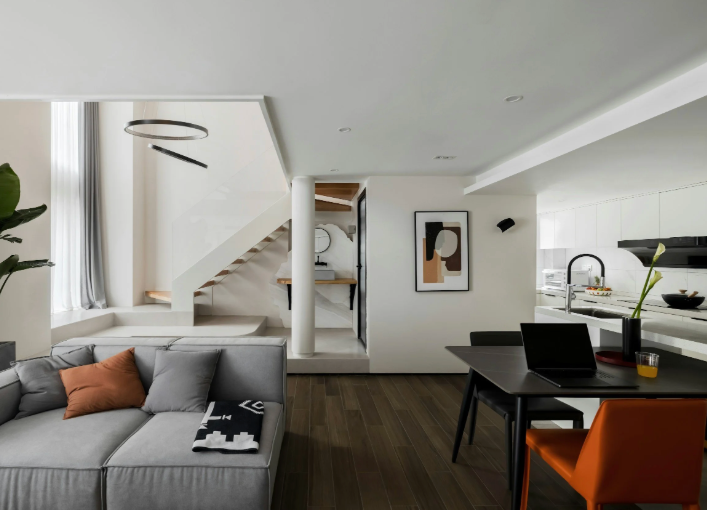
Balance in design is often misunderstood as perfect symmetry. Two identical chairs on each side, a centered table, mirrored décor. That is one form of balance, but not the only one.
Real spatial balance is about visual weight. Every object in a room carries a certain level of attention based on its size, color, height, texture, and position. When that visual weight is unevenly distributed, the room feels slightly uncomfortable, even if you can’t immediately explain why.
A large dark sofa on one side of a room might overpower a lighter seating arrangement on the other. A tall bookshelf in one corner might pull attention away from everything else. Even small objects, when clustered, can shift how a space feels.
Balance happens when these visual forces are distributed in a way that feels stable to the eye.
Why the Eye Notices Imbalance Instantly
The human brain is highly sensitive to structure. It constantly scans environments to understand order, direction, and stability.
When a room is balanced, the eye moves smoothly across it without getting stuck. When it is unbalanced, the eye keeps returning to certain points because something feels heavier or more dominant than the rest.
This creates a subtle sense of tension. Not discomfort in a dramatic way, but a quiet awareness that something is slightly off.
That is why some rooms feel calming immediately, while others take longer to settle into visually.
The Hidden Role of Visual Weight
Visual weight is not about physical weight. It is about perception.
Dark colors tend to feel heavier than light ones. Large objects feel heavier than small ones. Textured or complex surfaces draw more attention than flat ones. Tall objects pull the eye upward, while low objects anchor it downward.
Even empty space has weight in a design sense. A large empty area on one side of a room can feel just as dominant as a large piece of furniture.
Understanding this is the key to creating balance without strict symmetry.
Why Perfect Symmetry Doesn’t Always Work
At first glance, symmetry seems like the easiest way to create balance. If one side matches the other, everything feels aligned.
But in real homes, perfect symmetry can sometimes feel too rigid or staged. It can make a room feel less natural and more like a display.
Human movement is not symmetrical. People don’t sit evenly on both sides of a space all the time. Light enters unevenly. Furniture needs differ across zones.
Because of this, many well-designed rooms avoid strict symmetry and instead rely on balanced asymmetry, where different elements carry equal visual weight without being identical.
The Simple Rule Behind Balanced Spaces
The surprisingly simple rule is this: every strong visual element in a room needs a counterbalance somewhere else.
That doesn’t mean identical objects or mirrored placement. It means distributing attention evenly so that no single area dominates the entire space.
A heavy sofa on one side can be balanced by a tall plant or shelving unit on the other. A dark wall can be balanced by lighter furniture placement in front of it. A visually busy corner can be balanced by a calmer, open area elsewhere in the room.
The goal is not sameness. The goal is equilibrium.
How Furniture Placement Shapes Perception
Furniture is the primary tool for creating balance in a room because it carries the most visual weight.
A large sofa placed too close to one side can make the entire space feel shifted. Moving it slightly or pairing it with another visual element elsewhere can instantly restore balance.
Even spacing matters. Furniture that is evenly distributed creates a sense of stability, while uneven clusters can make a room feel compressed on one side.
The placement of each piece changes how the entire room is interpreted, even if nothing else changes.
The Importance of Height Distribution
Balance is not just horizontal. Vertical structure plays a major role as well.
If all tall objects are placed in one area of a room, that side feels visually heavier. If height is distributed across different zones, the room feels more stable.
For example, a tall shelf in one corner might be balanced by a floor lamp or vertical artwork on the opposite side. Lower furniture, like coffee tables and sofas, help anchor the middle ground.
A well-balanced room usually has variation in height spread throughout the space, rather than concentrated in one area.
Color and Contrast as Silent Influencers
Color is one of the strongest contributors to visual weight.
Dark tones feel denser and more grounded. Light tones feel open and airy. Bold colors naturally draw attention, even if they are used in small amounts.
A single dark feature wall, for example, can dominate a space if not balanced by lighter elements elsewhere. Similarly, a bright accent piece can pull focus if the rest of the room is too neutral.
Balance comes from spreading color intensity across the space so that no single area overwhelms the eye.
The Role of Negative Space
Empty space is often overlooked in discussions about design balance, but it plays a crucial role.
Negative space gives structure meaning. It prevents visual overload and allows the eye to rest between elements.
If a room is too filled, it feels heavy. If it has well-placed open areas, the entire layout feels more breathable and organized.
Balance is not just about what is placed in a room, but also about what is intentionally left open.
Why Balanced Rooms Feel More Comfortable
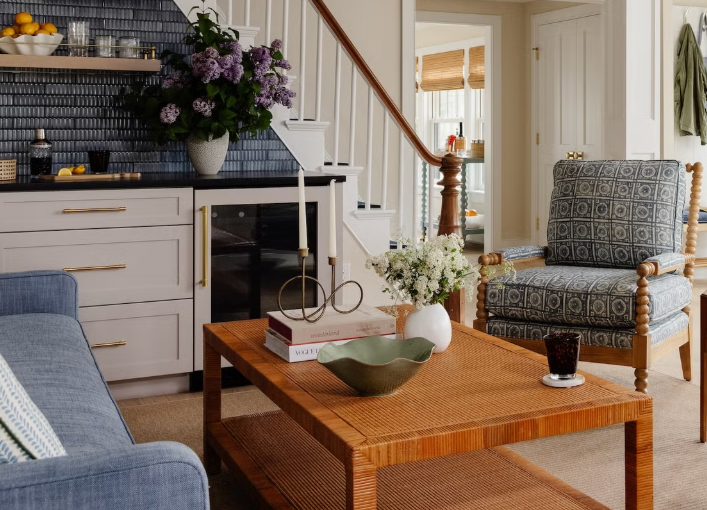
When a room is visually balanced, the brain does not need to constantly adjust its focus. Everything feels stable and predictable in a subtle way.
This creates a sense of ease. Not because the room is simple, but because it is evenly structured.
People tend to describe balanced rooms as “calming” or “easy to be in,” even if they don’t notice the design choices behind that feeling.
The comfort comes from reduced visual effort.
How Small Adjustments Change Everything
One of the most interesting things about balance in interior design is how little it takes to correct it.
Moving a single chair, adjusting the height of a lamp, or shifting a piece of décor can completely change how a room feels.
Sometimes the imbalance is not obvious until something is adjusted. Once corrected, the room suddenly feels more settled, even though nothing major has been added or removed.
This makes balance more of a refinement process than a construction process.
The Difference Between Static and Dynamic Balance
Not all balanced rooms feel the same. Some are static, meaning everything is evenly distributed and predictable. Others are dynamic, where balance is achieved through contrast and variation.
Dynamic balance is often more natural. It allows for uneven elements as long as they are counterweighted elsewhere.
This creates a more interesting visual experience without losing stability. The room feels alive but still grounded.
Why This Principle Matters More Than Trends
Design trends change constantly, but balance remains a foundational principle underneath all of them.
Whether a room is minimalist, modern, rustic, or eclectic, balance is what determines whether it feels cohesive or chaotic.
It is not dependent on style. It is dependent on distribution.
This is why even simple rooms can feel well-designed when balance is handled correctly, and expensive rooms can feel off when it is ignored.